You have the right part number, yet the plug will not thread in. Or the socket fits loosely and rounds the hex corners before you reach the specified torque. These are classic spark plug size mistakes. Thread diameter, thread reach, hex size and gap decide whether a replacement plug seats correctly, fires reliably and survives the combustion chamber. This guide shows how to read a spark plug sizes chart and how to apply those dimensions when you buy replacement plugs.
Content
The short version: four dimensions determine fit — thread diameter, thread reach, hex size and gap. Get any one wrong, and the engine will not run correctly.
Thread diameter must match the hole in the cylinder head; it has zero tolerance for improvisation. Thread reach positions the electrode tip inside the combustion chamber. Hex size determines which socket and torque value you use. The gap controls the voltage the ignition system must supply. Heat range, although not a physical dimension, is usually printed on the shell and is grouped with size codes because a plug that is too hot or too cold fails just as fast as a wrong-sized one.
Isometric structure view; proportions are illustrative, not to scale.
The table below summarises the size combinations found across cars, motorcycles, marine engines, small garden equipment and industrial units. A 14 mm thread with a 19 mm reach covers the majority of modern passenger vehicles.
| Thread diameter | Hex size | Typical reach | Common applications |
|---|---|---|---|
| 10 mm | 16 mm | 12.7 mm (1/2 in) | Small engines, compact motorcycles |
| 12 mm | 18 mm | 19 mm (3/4 in) | Motorcycles, some older compact cars |
| 14 mm | 20.8 mm or 21 mm | 19 mm (3/4 in) | Most modern cars, motorcycles, marine |
| 14 mm | 16 mm | 12.7 mm (1/2 in) | Some older Japanese cars, small motorcycles |
| 18 mm | 25.4 mm (1 in) | 18 mm (0.71 in) | Vintage engines, industrial equipment |
Illustrative values for general reference; the actual share varies by market and vehicle fleet.
Thread diameter is the outer width of the threaded shell. It must match the cylinder head boss exactly. A 12 mm plug will not seal a 14 mm hole, and forcing a 14 mm plug into a 12 mm head permanently destroys the threads. Most modern cars, motorcycles, marine outboards and generators use 14 mm; compact, vintage and industrial engines often use 10 mm, 12 mm or 18 mm.
Reach is the length of the threaded section, measured from the shell seat to the end of the threads. It decides how far the electrode tip sits inside the combustion chamber. Too short a reach leaves the electrode inside the thread boss, which causes misfires and carbon fouling. Too long a reach can hit the piston or valve, or protrude into a hot zone that promotes pre-ignition.
Typical values in millimetres; always confirm reach from the engine specification.
A reach difference of only a few millimetres changes the electrode position dramatically, so compare the old and new plug side by side before installation.
The hex (hexagon) size on the shell determines the socket you need and how much torque the plug can accept. It is the dimension people overlook most, because the hex size matters for both tool fit and heat transfer. A 20.8 mm hex and a 21 mm hex look nearly identical, but the 0.2 mm difference means a normal 21 mm socket can slip and round the shell corners.
Common hex sizes and where you will meet them:
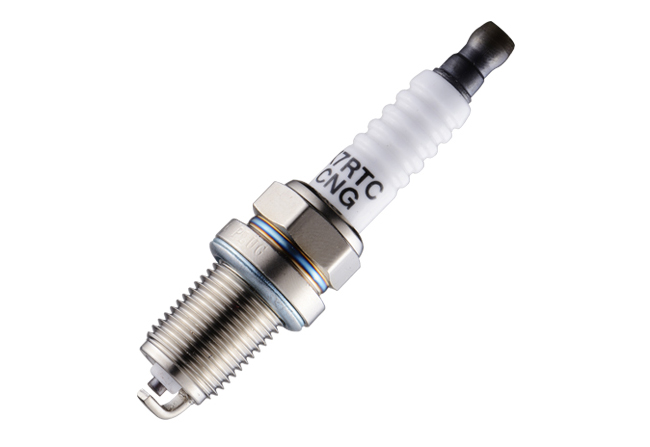
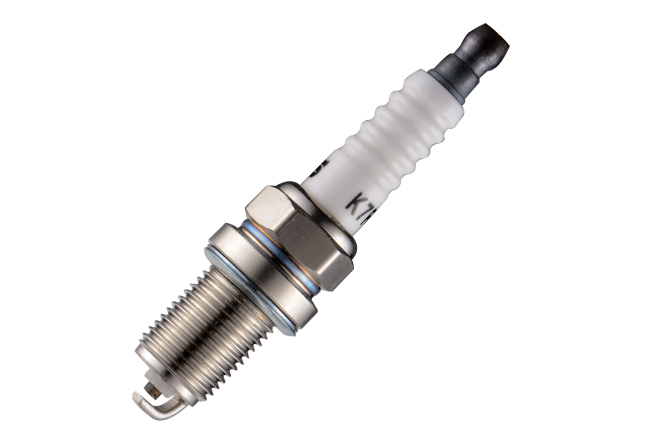 16mm Hex Copper Core Spark Plug K7RTC for Automotive UseThis plug's 16mm hex suits common automotive applications, while its copper core and nickel ground electrode support reliable firing. Consider it when adjusting spark plug gap, since the reach and electrode design affect ignition performance.View Product →
Gap is the distance between the centre electrode and the ground electrode. It is the only dimension you can change at installation. A wider gap gives a longer, more powerful spark, but it demands a higher voltage from the coil. If the gap is too wide, the coil cannot deliver enough voltage and you get misfires under load. If it is too narrow, the spark may be too short to ignite a lean mixture consistently.
Approximate values; actual voltage depends on compression, mixture strength and electrode wear.
Set the gap with a wire gauge to the specification in the engine manual. Never bend the centre electrode to adjust the gap; use the ground electrode only, and avoid prying tools that can chip the insulator.
Most manufacturers encode size information into the part number. Codes differ between brands, but the logic is consistent: letters near the front identify thread diameter and shell construction, numbers in the middle represent heat range, and letters at the end indicate reach, gap and electrode type. For example, a common 14 mm plug with standard reach, a 20.8 mm hex and a factory-set gap near 1.0 mm will carry a code that, once decoded, tells you exactly those values.
If the code is worn off, measure the thread diameter with a caliper and compare the old plug with a new one side by side. Thread pitch, reach and seat type are visible when the two shell ends are held together.
Once the physical size is correct, electrode material decides how long the plug lasts and how reliably it fires. Nickel is affordable and common; platinum and iridium resist erosion, so they keep the factory gap longer. The size chart does not change with material — a 14 mm plug is still 14 mm — but the heat range and gap specification may differ.
Relative scores for typical OEM-style plugs; actual performance varies by design.
Most modern cars use a 14 mm thread, a 19 mm reach and a 20.8 mm or 21 mm hex. CNG and LPG conversions usually keep the same physical size but step to a colder heat range, which is why gas-conversion fitment lists often specify a code with the same thread but a different heat symbol. You can compare fitment requirements when you choose the right automotive spark plug for your vehicle.
Motorcycles use 10 mm, 12 mm or 14 mm threads. Two common fitments are 14 mm x 19 mm reach with a 16 mm hex, and 12 mm x 19 mm reach with an 18 mm hex. The reach must be exact because the cylinder head is compact and highly stressed.
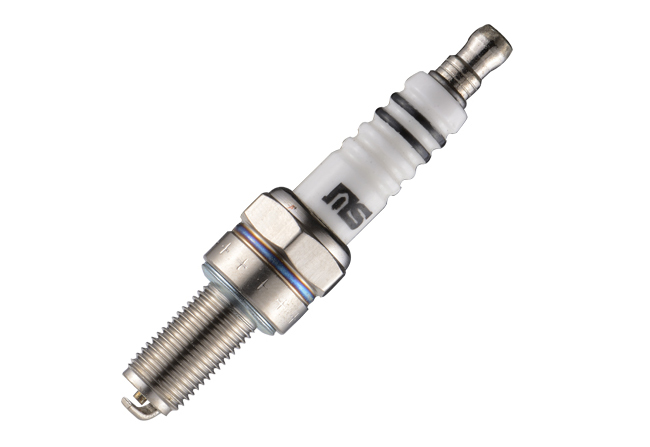 12mm Thread Motorcycle Spark Plug CR8E with Copper ElectrodeDesigned for motorcycles with 12mm threads, this CR8E plug features a copper center electrode and nickel ground electrode. It matches the compact cylinder head requirements discussed, helping ensure correct reach and consistent combustion.View Product →
Marine plugs follow the same thread standards as cars, but the shell and terminal are built to resist salt and humidity. A typical outboard plug is 14 mm with a 19 mm or 12.7 mm reach, depending on the manufacturer and model year.
Small air-cooled engines commonly use a 14 mm thread with a 12.7 mm reach, or a 10 mm thread with a 16 mm hex. The reach is shorter than on most cars because the combustion chamber is shallow and the electrode must not protrude.
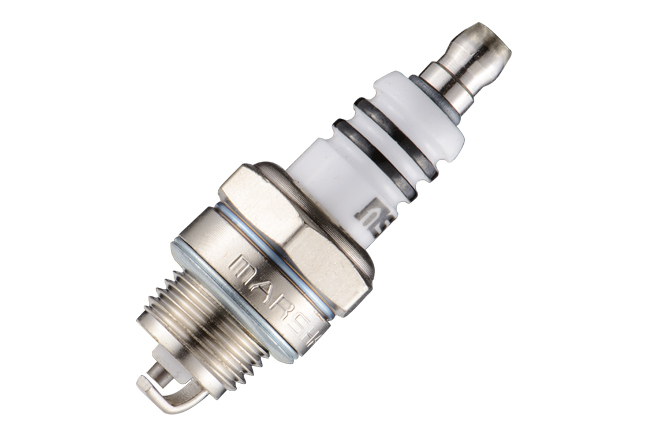 9.5mm Reach Lawn and Garden Spark Plug L7TThis L7T plug has a short 9.5mm reach, making it suitable for small air-cooled engines like lawn mowers. With copper and nickel electrodes, it fits shallow combustion chambers without protruding, supporting dependable low-load operation.View Product →
Larger industrial and vintage engines may use 18 mm threads with a 25.4 mm hex. These plugs are designed for sustained high loads, longer service intervals and hotter thermal environments.
Q1. What is the most common spark plug size for cars?
A 14 mm thread diameter with a 19 mm reach and a 20.8 mm or 21 mm hex is the most common combination for modern passenger cars.
Q2. How do I know what size spark plug I need?
Check the code printed on the old plug or the fitment chart in the engine manual; measuring thread diameter and reach with a caliper also works.
Q3. What is a spark plug gap chart and why does gap matter?
A gap chart lists factory-recommended gaps (usually 0.6–1.5 mm) by engine model. The gap controls required ignition voltage; a wrong gap causes misfires.
Q4. What is the difference between 10 mm and 14 mm spark plugs?
10 mm is a smaller thread diameter used in compact engines; 14 mm is larger and used in most cars, motorcycles and marine engines. They are not interchangeable.
Q5. Does hex size affect spark plug performance?
Hex size does not change ignition, but it controls socket fit and heat transfer; using a 21 mm socket on a 20.8 mm hex can round the shell corners.
Q6. What happens if the spark plug reach is too long or too short?
A too-long reach can hit the piston or cause pre-ignition; a too-short reach causes misfires and fouling because the electrode stays inside the thread boss.
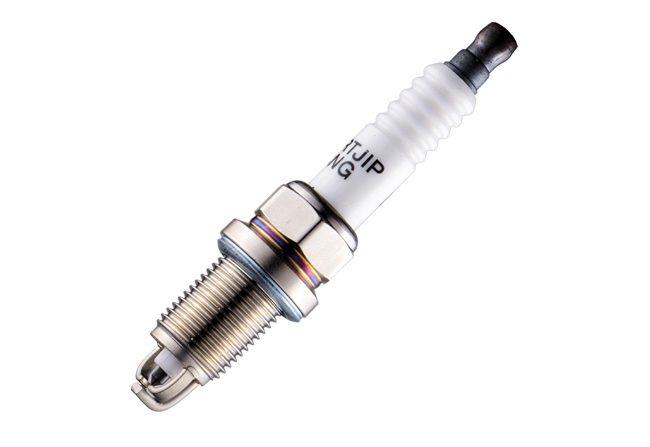
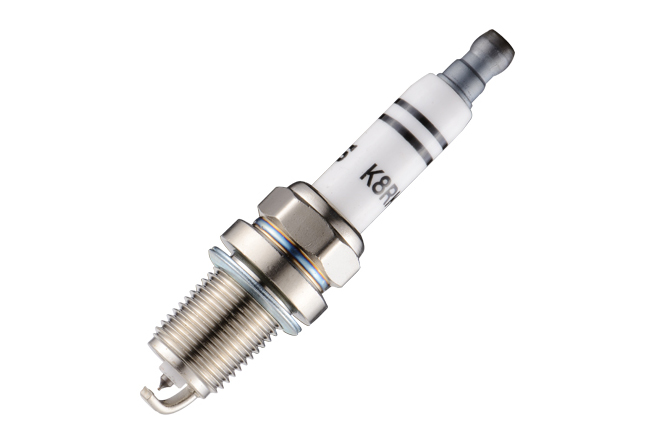
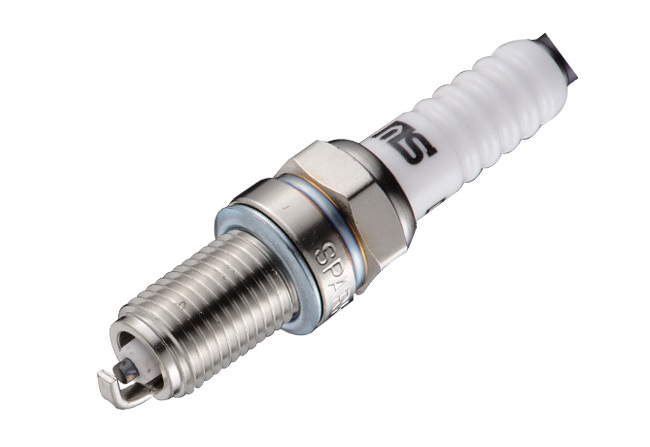

NINGBO MARSHAL AUTO PARTS CO., LTD. is a research and development, production and sales of professional manufacturers of spark plugs. Our company's spark plugs are mainly used in gasoline, natural gas and liquefied petroleum gas as fuel for all types of automobiles.
COPYRIGHT NINGBO MARSHAL AUTO PARTS CO., LTD. ALL RIGHTS RESERVED. Custom Spark Plugs Manufacturers OEM Spark Plugs Suppliers


 English
 中文简体
中文简体