English
 中文简体

Content
- 1 The Short Answer: Judge a Manufacturer by What It Controls In-House
- 2 Why the Supplier Choice Shapes Both OEM and Aftermarket Programs
- 3 Know the Automotive Spark Plug as an Engineered Assembly
- 4 Spark Plug Types and What They Mean for Your Range
- 5 Look Closely at Ceramic, Electrode and Shell Production
- 6 Laboratory Depth Tells You How a Supplier Handles Problems
- 7 Fitment Range: Thread, Reach and Hex Size Decide Coverage
- 8 What Black Spark Plugs Tell You About a Supplier and an Engine
- 9 Compare Materials on Five Practical Traits
- 10 Build a Supply Program for OEM and Aftermarket Together
- 11 Use a Weighted Scorecard to Compare Manufacturers
- 12 Run Samples and Pilot Orders in Stages
- 13 Packaging, Marking and Traceability Support Both Channels
- 14 How the Marshal Profile Maps to These Checkpoints
- 15 Mistakes Buyers Make When Selecting a Spark Plug Supplier
- 16 Putting It Together
- 17 Frequently Asked Questions
- 17.1 Q1. What are the different types of spark plugs?
- 17.2 Q2. What is the difference between iridium and platinum spark plugs?
- 17.3 Q3. Are iridium spark plugs better than copper spark plugs?
- 17.4 Q4. What are double iridium spark plugs?
- 17.5 Q5. What material is used in spark plug electrodes?
- 17.6 Q6. How long do iridium spark plugs last?
- 17.7 Q7. What are the symptoms of bad spark plugs?
- 17.8 Q8. What causes spark plug fouling?
- 17.9 Q9. Can spark plugs affect fuel economy?
- 17.10 Q10. What causes spark plug electrode wear?
The Short Answer: Judge a Manufacturer by What It Controls In-House
The most reliable way to choose an Automotive Spark Plug manufacturer is to look at how much of the product it controls itself: ceramic insulator production, electrode material selection, shell forming, laboratory testing and batch records. A supplier that holds these steps under one roof can explain why a plug behaves the way it does, and can adjust a design when an engine program or a repair market demands it.
For OEM supply, the priorities lean toward repeatability, drawing control and test depth. For aftermarket supply, the priorities lean toward a wide fitment range, clear labeling and consistent quality from one shipment to the next. Most buyers serve both channels, so the practical goal is a partner whose process is strong enough to carry either one.
- Check ceramic production: self-produced insulators allow tighter control of density and dielectric strength.
- Check test coverage: ask how many standards the laboratory applies and where inspection points sit in the process.
- Check fitment range: thread size, reach and hex size variety reduces the number of suppliers you need.
- Check traceability: batch codes and retained samples make any later investigation faster.
Why the Supplier Choice Shapes Both OEM and Aftermarket Programs
An engine asks a lot of a small part. According to the manufacturer's own product knowledge page at ms-marshal.com, modern engines typically call for ignition voltages between 20,000 and 40,000 volts, and the plug must deliver that spark cycle after cycle while sitting inside a hot, pressurized combustion chamber. Small differences in ceramic quality, electrode geometry or shell finish can show up later as misfires, hard starting or fouled plugs.
That is why the manufacturer matters more than any single catalog line. Two plugs with the same thread and the same heat range on paper can behave differently once they are exposed to real fuel, real driving cycles and real maintenance habits. The sections below walk through how to evaluate a supplier in a structured way, with attention to the points that separate a steady source from an unpredictable one.
How the Two Channels Differ
| Topic | OEM Supply | Aftermarket Supply |
|---|---|---|
| Product range | Focused on specific engine programs | Broad coverage of many vehicle models |
| Specification control | Drawing based, tightly documented | Cross reference based, application driven |
| Testing emphasis | Engine level matching and process records | Batch consistency and fitment accuracy |
| Packaging | Program specific, line side friendly | Retail or workshop friendly, clear part marking |
Know the Automotive Spark Plug as an Engineered Assembly
Before comparing suppliers, it helps to see the plug as five connected parts, each with its own material demands. A manufacturer who can describe every part in detail usually has the process knowledge to control it.
What Each Part Contributes
- Terminal stud: carries voltage from the ignition coil boot into the plug.
- Ceramic insulator: isolates the high voltage and conducts heat away from the nose. Density and dielectric strength matter most here.
- Hex shell: gives the socket a grip and carries the torque. Toughness and hardness help reduce shell breakage.
- Thread section: seals the combustion chamber and sets the heat path into the cylinder head.
- Electrodes: form the gap where the spark jumps. Their metal choice drives wear life and ignition stability.
Spark Plug Types and What They Mean for Your Range
Most Car Spark Plugs fall into three electrode families, with double iridium designs forming a fourth group for engines that need a finer tip on both electrodes. Your product mix should reflect the vehicles you serve. A market with many older engines may lean on copper, while a fleet of newer engines calls for iridium or platinum.
- Copper Spark PlugsStrong conductivity with a core that moves heat well. Common on older engines and some performance applications.
- Platinum Spark PlugsA middle option with longer wear life than copper and steady ignition under higher temperatures.
- Iridium Spark PlugsA hard, heat resistant tip that allows a fine electrode and long replacement intervals on many modern engines.
- Double Iridium Spark PlugsIridium on both center and ground electrodes, used where wear on the ground side also limits service life.
Typical Service Intervals by Plug Type
The manufacturer's product knowledge page gives typical figures of about 20,000 to 30,000 miles for copper, around 60,000 miles for platinum and 80,000 to 100,000 miles for iridium. The chart below uses the midpoint of each range. Actual intervals depend on the engine maker's schedule, fuel quality and driving pattern.
| Type | Typical Interval | Main Strength |
|---|---|---|
| Copper | 20,000 to 30,000 miles | Conductivity |
| Platinum | About 60,000 miles | Balanced wear life |
| Iridium | 80,000 to 100,000 miles | Durability |
Look Closely at Ceramic, Electrode and Shell Production
Three production areas deserve a direct question to any supplier. The first is the insulator. When ceramic insulators are produced in the manufacturer's own ceramic factory, the density, the thickness of the insulator nose and the dielectric strength can be tuned as one package. A thicker nose design and higher density support mechanical strength, which suits modern engines with higher cylinder pressures.
The second is the electrode. Good electrode material combines electrical conductivity, heat resistance, heat dissipation and resistance to ablation, which is the slow erosion caused by repeated sparking. The third is the shell. A shell with better malleability, toughness and hardness reduces the chance of shell breakage and helps pull heat out of the plug body.
- Ask whether insulators are made in-house or purchased as finished ceramic.
- Ask which metals are used for center and ground electrodes in each plug family.
- Ask how the insulator is joined to the terminal and shell, and what process holds that seal.
- Ask how shells are formed and what hardness range is applied.
The manufacturer profiled on this page describes the use of 360-degree continuous laser technology on high-strength insulator assemblies, along with self-produced ceramic insulators. Details like these are what you want to see in writing from any supplier you evaluate.
Laboratory Depth Tells You How a Supplier Handles Problems
A laboratory is where a supplier learns about its own product. The size of a test program, and the way it connects to production, shows whether quality is checked at the end of the line or built into each step.
- 30 yearsof development and reverse engineering experience
- 17international and national spark plug industry test standards applied
- 34+internal control standards at original supporting level
These figures come from the company profile of NINGBO MARSHAL AUTO PARTS CO., LTD. Process inspection also covers control points across the whole production flow, not only the finished plug. When you audit a supplier, ask for a map of inspection points and a sample of the records those points produce.
Tests Worth Asking About
- Insulation resistance and dielectric withstand at elevated temperature
- Gas leak tightness of the insulator to shell seal
- Thread dimension, hex dimension and reach checks by sampling plan
- Electrode gap measurement and tolerance control
- Mechanical strength of the insulator and shell torque response
Fitment Range: Thread, Reach and Hex Size Decide Coverage
Aftermarket buyers spend a large share of their effort on fitment. A plug that does not thread in cleanly, or sits too deep or too shallow in the head, causes returns and workshop frustration. A supplier with a broad range across thread diameter, reach and hex size lets you cover more vehicles with fewer source relationships.
| Model | Thread Size | Reach | Hex Size |
|---|---|---|---|
| K7RTJIP-CNG | 14mm | 19mm | 16mm |
| K7RTC-CNG | 14mm | 19mm | 16mm |
| DF7RTC-CNG | 12mm | See product page | 16mm |
| Q6RTI-15 | 14mm | 17.5mm | See product page |
Automotive Spark Plugs from the Marshal Range
The cards below show models from the NINGBO MARSHAL AUTO PARTS CO., LTD. automotive line. Each card links to its product page for full specifications.
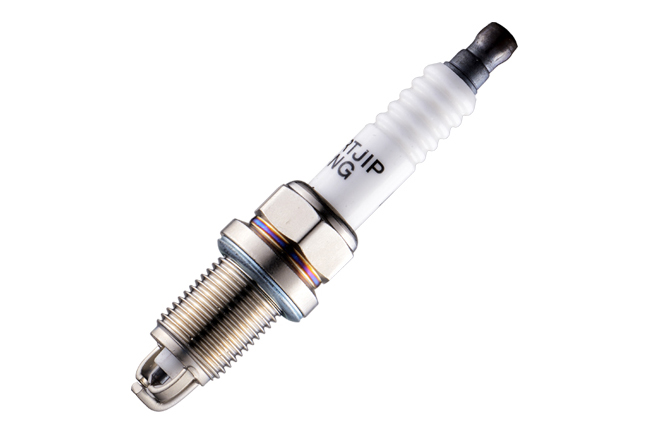 K7RTJIP-CNGThread 14mm, reach 19mm, hex 16mmView product
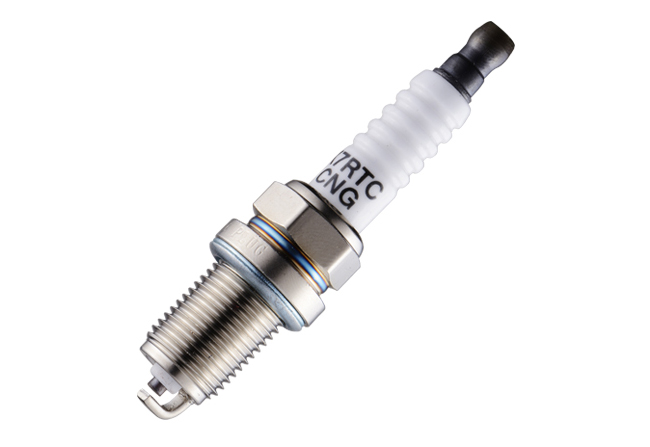 K7RTC-CNGThread 14mm, reach 19mm, hex 16mmView product
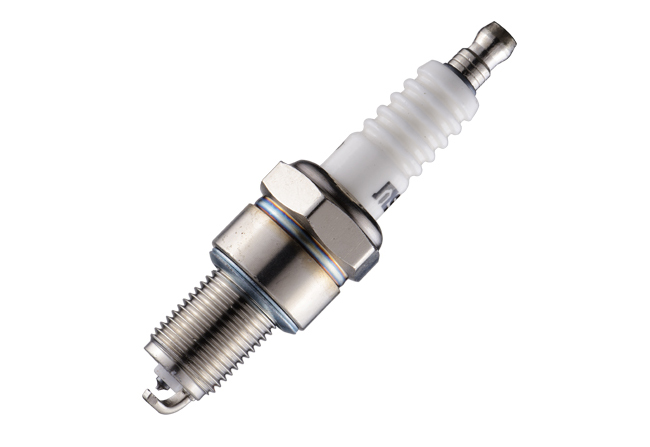 F7RTPHex size 16mmView product
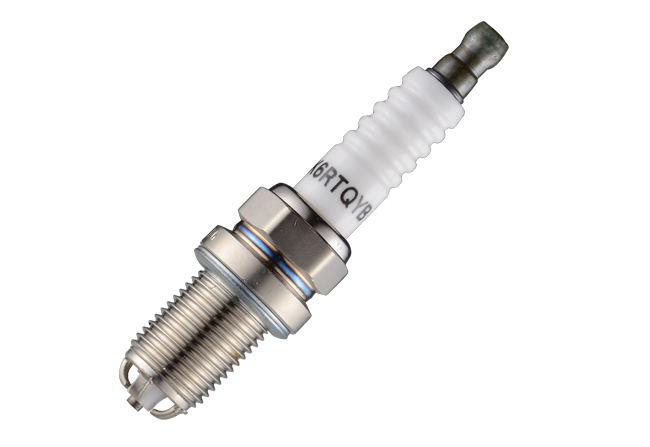 K6RTQYBReach 19mmView product
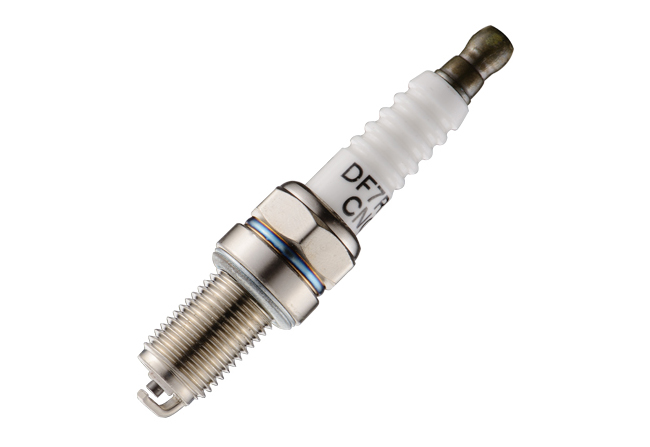 DF7RTC-CNGThread 12mm, hex 16mmView product
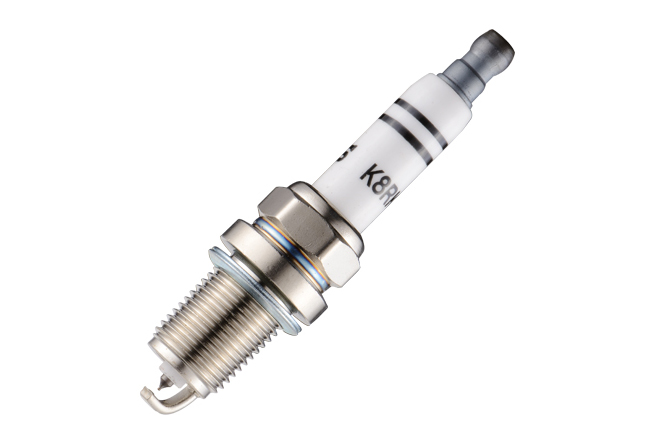 K8RKAIPAutomotive spark plugView product
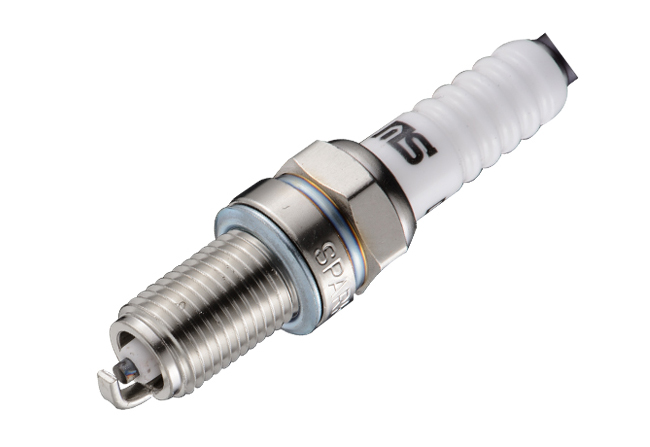 K7RKJIP-11Hex size 16mmView product
 Q6RTI-15Thread 14mm, reach 17.5mmView product
What Black Spark Plugs Tell You About a Supplier and an Engine
Black spark plugs are one of the most common items in workshop returns, and they are also one of the most misread. A black, sooty nose can come from a rich mixture, a plug heat range that runs too cold for the duty cycle, weak ignition output, a dirty air filter or a long stretch of short trips. It does not always point at the plug itself.
For a buyer, the value lies in sorting the causes. If returned plugs from one batch show dry black soot in several unrelated engines, the heat range or electrode design deserves a second look. If the plugs come from a single vehicle with known fuel system trouble, the plug is reporting a problem rather than causing one.
Common Causes of Black Deposits
- Rich air and fuel mixture: dry, soft, velvet-like soot on the nose.
- Heat range too cold: the nose never reaches a temperature that burns deposits off.
- Oil entering the chamber: wet, shiny black deposits, often tied to worn rings or valve seals.
- Weak spark energy: a tired coil or damaged lead leaves the plug unable to clean itself.
- Mostly short trips: the engine seldom reaches full operating temperature.
Electrode Wear and Gap Growth
Wear is the other thing returned plugs reveal. As the electrode edges round off, the gap widens and the voltage needed to jump it rises. Harder electrode materials slow that growth. The chart shows the general shape of this effect as an illustrative model, not as measured test data.
Compare Materials on Five Practical Traits
No single electrode metal leads in every area. Copper conducts electricity and heat very well but wears faster. Iridium resists wear and heat load but conducts less. The radar chart below uses qualitative ratings from one to five, based on general material behavior, to help you decide which families belong in a balanced range.
Reading the chart, a sourcing plan that carries copper for older engines, platinum for mid-life engines and iridium or double iridium for newer ones covers most repair demand without forcing one material into the wrong job.
Build a Supply Program for OEM and Aftermarket Together
A mixed program works best when the two channels share the same manufacturing base but keep separate paperwork. Ask the supplier to describe how a drawing-controlled OEM item and a catalog aftermarket item move through the same factory, and where the records diverge.
Start with a Specification Package
Write down thread size, reach, hex size, heat range, electrode material, gap setting, resistor value and terminal style for every item. A clear specification package prevents the most common cause of early disagreement between buyer and factory.
Separate the Two Channels Early
OEM programs benefit from a named engineering contact and documented change control. Aftermarket programs benefit from a cross reference sheet linking each part number to vehicle applications. Keeping these documents apart reduces mix-ups later.
Plan for Gas Fuel Variants
Several models in the Marshal automotive range carry a CNG suffix, indicating use with natural gas engines. The manufacturer describes its plugs as used in engines running on gasoline, natural gas and liquefied petroleum gas. If your market includes converted or dedicated gas vehicles, confirm that the supplier can describe the design differences for those fuels.
Use a Weighted Scorecard to Compare Manufacturers
A scorecard keeps a team honest when several suppliers look similar. Weights should reflect your own priorities, and the example below is one reasonable starting point rather than an industry standard.
- Material: insulator, electrode and shell material control.
- Testing: standards applied and inspection coverage.
- Range: breadth of thread, reach and hex options.
- Trace: batch coding and record keeping.
- Delivery: planning discipline and communication.
Run Samples and Pilot Orders in Stages
Good supplier relationships are built in stages. A staged approach limits exposure and gives both sides time to correct small issues.
- Stage 1. Document review.Compare specifications, drawings and test summaries against your needs.
- Stage 2. Sample inspection.Measure thread, hex, reach and gap on a sample set, and check the markings.
- Stage 3. Bench and fitment checks.Install on representative engines and record results.
- Stage 4. Pilot order.Place a modest first order and review batch records on arrival.
- Stage 5. Ongoing review.Track returns, inspect reasons and share findings with the factory.
Packaging, Marking and Traceability Support Both Channels
Packaging is part of the product. A box that crushes in transit, a label that misprints a part number or a terminal cap that detaches can all lead to returns even when the plug is sound. Ask to see finished cartons, inner trays and master cases, not only the plug.
- Part marking: legible model code on the insulator or shell.
- Batch coding: a code on the carton that ties back to production records.
- Protective trays: electrodes and threads protected from impact.
- Clear instructions: gap setting and torque guidance included where useful.
- Retained samples: reference plugs kept for later comparison.
How the Marshal Profile Maps to These Checkpoints
NINGBO MARSHAL AUTO PARTS CO., LTD. describes itself as a professional China Automotive Spark Plugs manufacturer and factory, with engineering, technical and manufacturing capabilities that continue to advance. Against the checkpoints in this guide, its published profile covers these points:
| Checkpoint | Published Information |
|---|---|
| Ceramic control | Own ceramic factory, insulators self-produced |
| Insulator joining | 360-degree continuous laser technology |
| Engineering depth | 30 years of development and reverse engineering experience |
| Test coverage | 17 industry standards and more than 34 internal control standards |
| Process control | Inspection across the whole process of control points |
Treat this as a starting point. Request samples and records, and verify each claim against what you receive.
Mistakes Buyers Make When Selecting a Spark Plug Supplier
- Comparing catalogs only.A long part list says little about process control. Pair it with a factory review.
- Skipping heat range discussion.A wrong heat range is a frequent source of fouled plugs and early returns.
- Ignoring packaging samples.Damage in transit is easy to avoid when it is found early.
- Relying on one inspection.A single approved sample does not describe later batches. Plan periodic checks.
- Leaving returns unanalyzed.Returned plugs are data. Sort them by cause and share the findings.
Putting It Together
Choosing an Automotive Spark Plug manufacturer for OEM and aftermarket supply comes down to evidence. Look at ceramic production, electrode and shell materials, laboratory coverage, fitment range and traceability. Use samples and staged orders to test what the paperwork says. Keep a scorecard so the decision rests on shared criteria, and read your returns, including black spark plugs, as feedback on both the engine and the product.
To review the Automotive Spark Plugs mentioned in this guide, visit the Marshal automotive spark plug range and compare thread size, reach and hex size against your own vehicle coverage.
Frequently Asked Questions
-
Q1. What are the different types of spark plugs?
Common Spark Plug Types include copper, platinum, iridium and double iridium. They differ in electrode metal, wear life and how much heat load they handle.
-
Q2. What is the difference between iridium and platinum spark plugs?
Iridium Spark Plugs use a harder tip that allows a finer electrode and longer intervals. Platinum Spark Plugs offer a longer life than copper at a more moderate level.
-
Q3. Are iridium spark plugs better than copper spark plugs?
Iridium usually lasts longer, while Copper Spark Plugs conduct well and suit many older engines. The right choice follows the engine maker's recommendation.
-
Q4. What are double iridium spark plugs?
Double Iridium Spark Plugs carry iridium on both the center and ground electrodes, which reduces wear on the ground side as well.
-
Q5. What material is used in spark plug electrodes?
Electrodes are commonly made from nickel alloys with a copper core, or from platinum or iridium for the tip, depending on the plug family.
-
Q6. How long do iridium spark plugs last?
The manufacturer's product knowledge page gives a typical range of 80,000 to 100,000 miles, though the engine schedule should guide replacement.
-
Q7. What are the symptoms of bad spark plugs?
Typical signs are rough idling, misfires, hard starting, slow acceleration and weaker fuel economy.
-
Q8. What causes spark plug fouling?
Rich mixtures, a heat range that is too cold, oil entering the chamber and weak ignition output can all leave black spark plugs with heavy deposits.
-
Q9. Can spark plugs affect fuel economy?
Yes. Worn or fouled plugs can lead to incomplete combustion, which may reduce fuel economy and raise emissions.
-
Q10. What causes spark plug electrode wear?
Repeated sparking slowly erodes electrode edges. Heat, fuel quality, gap setting and electrode material all affect how fast this happens.