To gap a spark plug correctly, use a spark plug gap tool or feeler gauge to measure the distance between the center electrode and the ground electrode, then carefully bend the ground electrode until the gap matches your vehicle manufacturer's specification — typically between 0.6 mm and 1.8 mm (0.024 in to 0.071 in) depending on engine type. Getting this measurement right is one of the most impactful and overlooked steps in routine vehicle maintenance.
A correctly gapped automotive spark plug ensures complete ignition of the air-fuel mixture inside the combustion chamber, directly affecting engine starting reliability, fuel efficiency, and overall engine performance. If you are replacing plugs or preparing new ones for installation, checking and adjusting the gap takes under two minutes per plug — and the difference in how your engine runs can be immediately noticeable.
Content
The spark plug gap is the measured distance between the center electrode and the ground electrode (also called the side electrode) at the firing tip of a spark plug. When the ignition system fires, a high-voltage electrical charge jumps across this gap, igniting the compressed air-fuel mixture in the combustion chamber. The size of this gap must fall within a precise range to allow reliable spark ignition under all operating conditions.
If the gap is too wide, the voltage required to bridge it exceeds what the ignition coil can reliably deliver, resulting in engine misfire, rough idle, and poor acceleration. If the gap is too narrow, the spark is weak, ignition timing becomes erratic, and combustion is incomplete — leading to increased fuel consumption and higher emissions. The gap is a fundamental tuning parameter of the entire spark ignition system.
Most passenger vehicle engines require a gap between 0.028 in and 0.060 in (0.7 mm to 1.5 mm). High-performance and turbocharged engines often specify tighter gaps due to higher cylinder pressures, while naturally aspirated engines with lower compression may run wider gaps to maximize flame kernel development.
The spark plug gap directly influences four measurable engine performance parameters: ignition reliability, combustion completeness, fuel efficiency, and exhaust emissions. Research across multiple engine types consistently shows that an out-of-specification gap of as little as 0.010 in (0.25 mm) can reduce fuel economy by 2–4% and increase hydrocarbon emissions by 10–15% due to partial combustion events.
Engine Performance Impact: Correct vs Incorrect Spark Plug Gap (%)
This chart illustrates how an out-of-specification spark plug gap degrades four key engine performance metrics relative to a correctly gapped plug. Fuel efficiency shows the most immediate impact, dropping to roughly 76% of optimal when the gap is off by just 0.3 mm. Ignition reliability falls sharply as well, which is why engine misfires are often the first symptom a driver notices. Maintaining proper gap specification is one of the simplest and most cost-effective steps in preventive vehicle maintenance.
Beyond basic combustion, ignition timing is closely linked to gap size. Modern engine control units (ECUs) use knock sensors and oxygen sensors to compensate for marginal combustion quality — but these corrections come at the cost of retarded timing and reduced power. A properly gapped car engine spark plug allows the ECU to operate within its intended calibration window, delivering the fuel economy and power output the engine was designed to produce.
You need a spark plug gap gauge — either a coin-type feeler gauge, a wire-type gap gauge, or a flat blade feeler gauge set. Each has strengths depending on the electrode style of the plug you are working with. Using the wrong tool type, or trying to estimate gap visually, is the leading cause of gapping errors among DIY mechanics.
| Tool Type | Measurement Method | Best For | Accuracy |
|---|---|---|---|
| Coin-Type Gap Gauge | Graduated ramp edge | Standard copper/nickel plugs | ±0.002 in |
| Wire-Type Feeler Gauge | Individual wire diameters | Curved/recessed electrodes | ±0.001 in |
| Flat Blade Feeler Gauge | Blade thickness | Wide flat-gap electrode designs | ±0.001 in |
| Digital Gap Gauge | Electronic caliper probe | Precision professional use | ±0.0005 in |
For most standard automotive spark plugs with conventional nickel or copper electrodes, a coin-type or wire-type spark plug gap tool costing under $10 is entirely sufficient. Note: for iridium and platinum plugs, always use a wire-type gauge only — blade and coin gauges can chip the fine-wire electrode tips if slid across them.
Before you can adjust anything, you need to accurately measure spark plug gap and compare it to specification. The process differs slightly depending on your gauge type, but the principle is the same: you are finding the exact separation between the tip of the center electrode and the inner surface of the ground electrode directly above it.
To accurately check spark plug gap, always measure from the center electrode's flat firing surface to the ground electrode's inner surface — not from the outer curved surface of either electrode. Measuring from the wrong surface is a common error that reads 0.004–0.008 in too wide on standard plugs.
Typical Spark Plug Gap Specification by Engine Type (mm)
This chart shows the typical spark plug gap specification ranges across four common engine categories. Turbocharged engines consistently require tighter gaps because the increased cylinder pressure demands less voltage to fire the plug — a wider gap would cause misfires under boost. Standard naturally aspirated petrol engines have a broader acceptable range, typically 0.7–1.1 mm. Always use your vehicle's specific manufacturer specification rather than these ranges, as individual models can fall outside the general category guidelines.
The following steps explain how to gap spark plugs correctly for standard copper or nickel-tipped automotive spark plugs. The process to adjust spark plug gap takes approximately 1–3 minutes per plug once you have the right tools.
Check the emissions sticker on the underside of the hood, your owner's manual, or the spark plug manufacturer's application guide. Never assume — even the same plug model number may have different required gaps for different vehicle applications. Write the specification on a piece of tape on your workbench before starting.
Use your wire gauge or coin gauge to measure the gap on each new plug before installation. Even plugs fresh from the box often arrive pre-gapped at a nominal value that may not match your engine's specification. Record the measurement.
Never bend or press the center electrode. All gap adjustment is done by carefully bending the ground electrode — the curved L-shaped arm above the center electrode. Use the bending notch built into the coin gauge, or the slot on a wire-type gauge, to gently lever the ground electrode inward (to decrease gap) or outward (to increase gap). Apply force in small increments: 0.001–0.002 in at a time.
After each adjustment, re-measure the gap. Continue until the correct wire passes with light drag and the next size up will not pass. Confirm the gap is uniform across the full width of the electrode — not tapered or angled. A tapered gap causes inconsistent spark ignition timing.
Before installing, visually inspect the plug for cracked ceramic insulator, damaged threads, or contaminated electrode surfaces. Check that the ground electrode is centered directly above the center electrode — off-center positioning from improper bending causes uneven spark discharge. Install finger-tight first, then torque to specification (typically 15–25 Nm for most M14 thread plugs).
Even experienced mechanics make these gapping errors, especially under workshop time pressure. Understanding them in advance reduces the likelihood of a repeat misfire diagnosis shortly after plug replacement.
The consequences of an incorrect gap are not just theoretical. Both extremes — spark plug gap too wide and spark plug gap too small — produce distinct, diagnosable symptoms that affect drivability, fuel economy, and long-term component life.
When the gap exceeds specification, the ignition coil must generate higher voltage to bridge the larger air gap. Under normal load this may succeed intermittently, but under high load, cold starts, or at high RPM the available voltage is insufficient. The result is engine misfire, rough idle, hesitation under acceleration, and in severe cases, raw fuel entering the exhaust — which can damage catalytic converters. The ECU may log P0300–P030X misfire codes. Excessive gap also accelerates electrode erosion because each successful spark discharge is more energetic than designed.
A gap that is too small produces a weak, short-duration spark that may not reliably ignite the full air-fuel mixture in the combustion chamber. Particularly at idle and low load (where the mixture is leaner), incomplete combustion causes rough idle, elevated CO emissions, poor fuel efficiency, and carbon fouling of the plug tip. Carbon deposits further reduce the effective gap over time, compounding the problem and shortening plug service life by 20–40%.
Misfire Rate vs. Spark Plug Gap Deviation from Specification
The U-shaped curve demonstrates how engine misfire rate increases sharply as spark plug gap deviates from the optimal specification in either direction. The lowest misfire rate occurs right at or within 0.1 mm of the target gap. Notably, a wide gap (positive deviation) causes a steeper misfire rate increase than a narrow gap, which is why turbocharged engines — where achieving the required spark voltage is already harder due to high cylinder pressure — are particularly sensitive to gaps that are even slightly too large. Staying within ±0.05 mm of spec is the practical target for high-reliability ignition.
This is one of the most frequently misunderstood points in spark plug replacement. The short answer: check the manufacturer's instructions for your specific plug. Many premium iridium spark plug and platinum spark plug products are shipped pre-gapped at a precise value from the factory, and the manufacturer explicitly states not to adjust the gap — because the fine-wire electrode tips (as small as 0.4 mm diameter for iridium) are fragile enough that any bending risks fracturing or displacing them.
However, this pre-gapped assumption applies only when the plug part number is selected specifically for your vehicle application. If you are using a universal-application plug that happens to be iridium-tipped, checking the gap against your engine specification is still necessary — and if it requires adjustment, use only a wire-type gauge inserted parallel to the electrode axis (never slid across). The gap is adjusted by very gently prying the ground electrode, never touching the center electrode.
Spark Plug Type Comparison: Copper vs Platinum vs Iridium
The radar chart compares conventional copper/nickel spark plugs with iridium plugs across five performance dimensions. Copper plugs score highest on gapping ease and cost efficiency, making them straightforward to adjust in the field. Iridium plugs excel in service lifespan and cold-start performance due to their fine-wire center electrode geometry and superior thermal conductivity, but their fragility makes gap adjustment significantly more difficult and risky. Platinum plugs fall between these two in most categories. The takeaway: never assume iridium or platinum plugs are pre-gapped correctly for your specific engine without verifying.
| Plug Type | Gap Adjustment | Gauge Type | Typical Service Interval |
|---|---|---|---|
| Copper / Nickel | Always check and adjust | Wire or coin gauge | 20,000–30,000 km |
| Platinum (single) | Check; gentle adjustment only | Wire gauge only | 60,000–80,000 km |
| Iridium (fine wire) | Check only; adjust with extreme care | Wire gauge only | 80,000–120,000 km |
| Double Platinum / Double Iridium | Do not adjust — pre-gapped | Wire gauge for check only | 100,000–160,000 km |
NINGBO MARSHAL AUTO PARTS CO., LTD. is a professional China automotive spark plug manufacturer with over 30 years of development and reverse engineering experience. Every plug produced under the Marshal brand is built on three vertically integrated strengths: in-house ceramic insulator production, precision electrode metallurgy, and laboratory validation against 17 international and national spark plug industry test standards, plus more than 34 original OEM-level internal control standards.
Marshal's high-strength insulators use 360-degree continuous laser bonding technology, yielding higher dielectric strength and better mechanical resistance than conventional bonded insulators. Electrodes are engineered for electrical conductivity, heat resistance, and ablation resistance. The ceramic factory operates within the same facility, enabling direct control of insulator density — a critical variable in thermal management and ignition system reliability. All electrode materials comply with RoHS and REACH certifications, and the quality management system holds international QMS certification. For buyers who need automotive spark plugs that meet modern engine requirements without compromise, Marshal's integrated manufacturing model provides a traceable, test-validated foundation for every part number in their catalog.
Q1: What is the standard spark plug gap for most cars?
Most passenger cars require a gap between 0.028 in and 0.060 in (0.7–1.5 mm). However, always verify your vehicle's specific requirement on the emissions sticker or in the owner's manual — the same plug model can have different specifications for different engine applications.
Q2: Can I gap a spark plug without a gap tool?
It is not recommended. Visual estimation is unreliable to within 0.005 in, which is enough to affect ignition performance. A basic wire-type spark plug gap gauge is inexpensive and provides the accuracy needed. Using a random piece of wire or a coin is not an acceptable substitute for precise gap measurement.
Q3: How often should spark plug gap be checked?
For copper/nickel plugs, check and replace every 20,000–30,000 km or as directed by your service schedule. For iridium or platinum plugs, the service interval extends to 80,000–160,000 km, but checking gap on a new plug before first installation is still recommended regardless of electrode material.
Q4: Will a wrong spark plug gap cause the check engine light to come on?
Yes. If an incorrect gap causes engine misfires, the ECU will detect incomplete combustion events and log misfire fault codes (P0300–P030X). This illuminates the check engine light. Correcting the gap and clearing the codes typically resolves the issue if no other ignition system components are damaged.
Q5: Does a wider spark plug gap give more power?
Not necessarily. A wider gap can improve flame kernel development under ideal conditions, but only if the ignition system can reliably deliver the required voltage. Exceeding specification — even by 0.010 in — risks misfires that eliminate any theoretical combustion benefit. Always follow manufacturer specifications rather than experimenting with gap size.
Q6: Can engine starting problems be caused by incorrect spark plug gap?
Yes. Engine starting problems are a common symptom of both too-wide and too-narrow gaps, particularly in cold conditions when fuel vaporization is reduced and the air-fuel mixture is harder to ignite. A too-wide gap causes the spark to fail under low cranking RPM; a too-narrow gap produces an insufficient flame kernel. Both can result in extended cranking, rough initial idle, or complete no-start in extreme cases.
Q7: How does spark plug gap affect fuel efficiency?
An incorrect gap leads to incomplete combustion, which means unburned fuel exits through the exhaust rather than contributing to engine power. Studies show a gap deviation of 0.3 mm can reduce fuel efficiency by 3–6% depending on engine type and driving conditions. Maintaining correct gap is one of the lowest-cost ways to preserve factory fuel economy over a vehicle's service life.
Q8: Should I gap new spark plugs or use them straight out of the box?
Always check new plugs before installation. While manufacturers attempt to set plugs at a standard gap, tolerances in the packaging and shipping process can shift the gap by up to 0.005–0.010 in. For copper and nickel plugs, always measure and adjust to your vehicle's specification. For iridium fine-wire plugs, measure only — adjust with extreme care if needed.
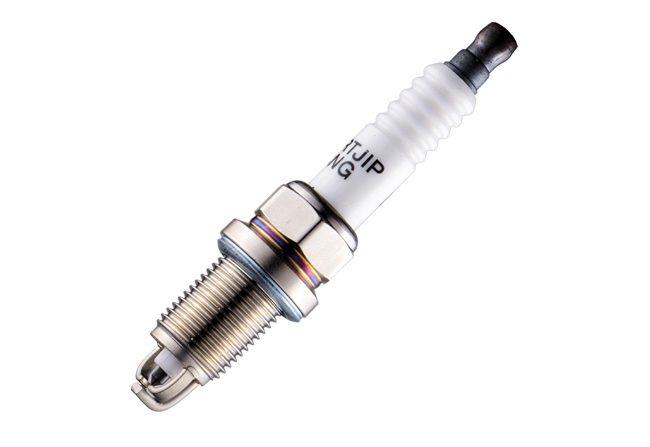
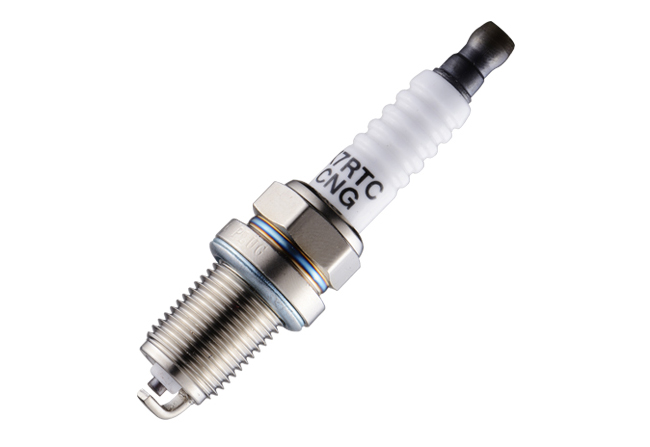
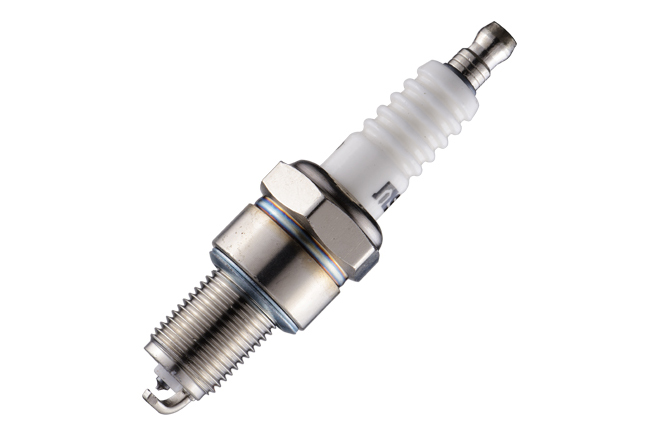
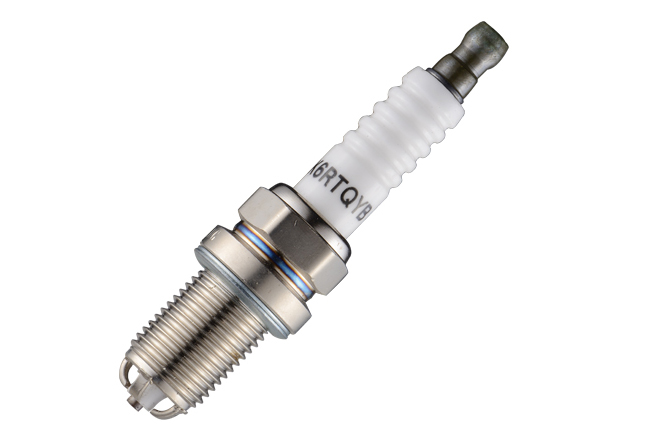
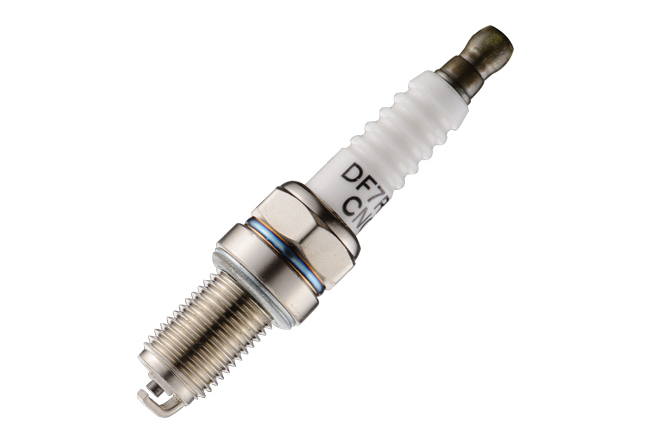
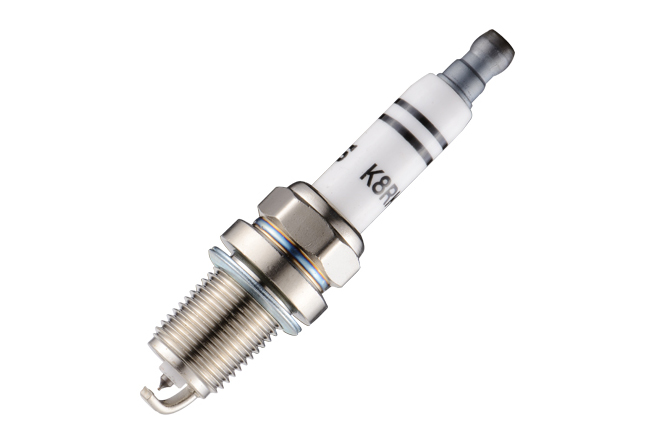
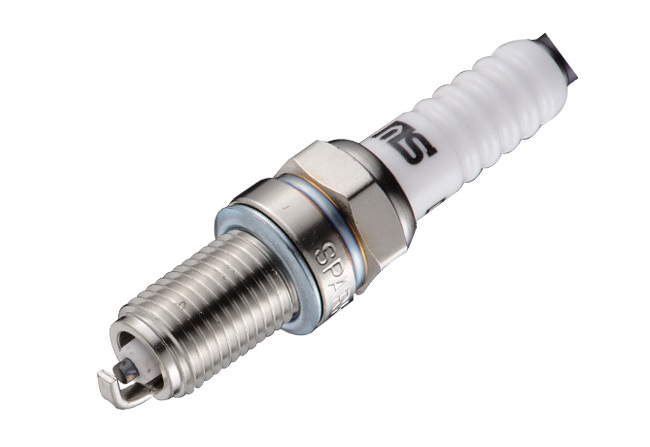
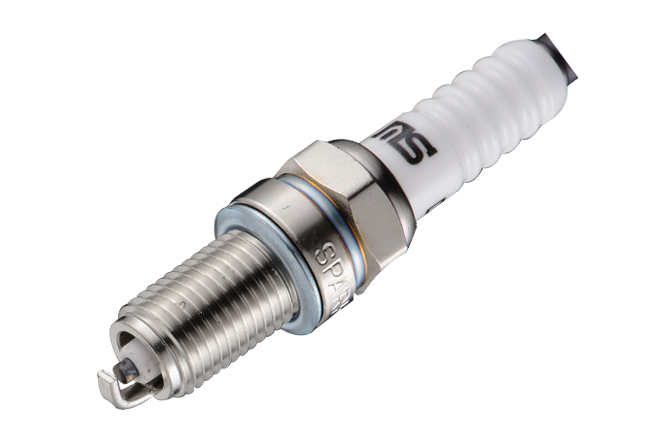

NINGBO MARSHAL AUTO PARTS CO., LTD. is a research and development, production and sales of professional manufacturers of spark plugs. Our company's spark plugs are mainly used in gasoline, natural gas and liquefied petroleum gas as fuel for all types of automobiles.
COPYRIGHT NINGBO MARSHAL AUTO PARTS CO., LTD. ALL RIGHTS RESERVED. Custom Spark Plugs Manufacturers OEM Spark Plugs Suppliers


 English
 中文简体
中文简体