Pull an iridium plug after 60,000 km and it often looks like it went in last month. That is not a sign that nothing is happening inside the cylinder — it is a sign that you are reading the wrong thing. On a fine-wire iridium plug, colour and deposits carry almost the whole diagnosis, while the gap barely moves. Read the insulator and the tip first, the deposits second, and measure the gap last.
That order is the opposite of how most people read a nickel plug, and it is the single change that fixes most misdiagnoses. Everything below follows it, using the same checks a spark plug production line applies to its own samples: tip geometry, insulator condition, deposit type, heat range, and a cylinder-by-cylinder comparison at the end.
Content
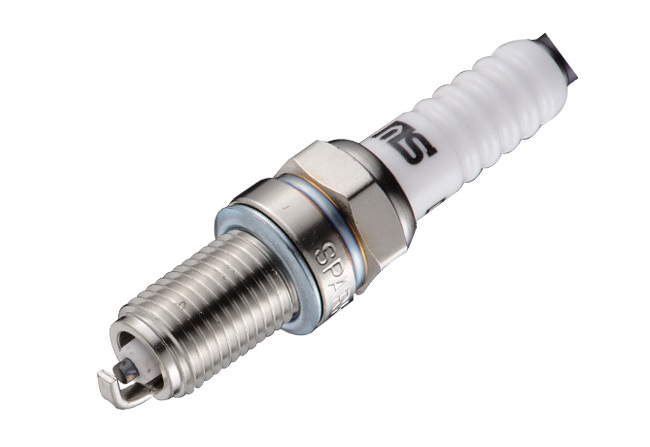
A conventional nickel-alloy spark plug runs a centre electrode about 2.4 mm across. An iridium plug replaces that with a fine wire tip of roughly 0.4 mm to 0.7 mm, laser-welded onto the centre electrode. Three things change at once, and all three affect how you read the plug.
Melting point is the physical reason behind the second point. Nickel alloy softens and erodes well below iridium's working range, so a nickel plug shows its age at the gap. Iridium does not, which means an unusually wide iridium gap is a symptom of something else — rough handling, a damaged pad, or a service interval that was stretched too far.
| Electrode material | Typical tip diameter | What dominates the reading | Handling caution |
|---|---|---|---|
| Nickel alloy | About 2.4–2.5 mm | Gap growth and electrode shape | Can be re-gapped with a conventional tool |
| Platinum | About 0.8–1.0 mm | Deposits plus moderate gap growth | Re-gap gently, or replace |
| Iridium | About 0.4–0.7 mm | Colour, deposits and tip integrity | Never lever the centre electrode; use a wire gauge |
Most misreadings come from how the plug is handled, not from how it looks. Five steps keep the evidence intact.
The table below covers the readings you are most likely to meet, in the order they usually turn up in a workshop.
| Appearance | Most likely cause | Check first | Risk if ignored |
|---|---|---|---|
| Light tan or grey-brown, dry | Normal combustion | Nothing — record the gap and refit | None |
| Dry, sooty black, matte | Rich mixture, short trips, cold heat range, clogged air filter | Air filter, coolant temperature, thermostat, heat range | Misfire, rough idle, rising fuel use |
| Wet, glossy black | Oil past valve guides, valve seals or piston rings | Oil consumption history, compression or leak-down test | Converter damage, worsening fouling |
| White, blistered or melted electrodes | Lean mixture, over-advanced timing, too-hot heat range, cooling fault, pre-ignition | Fuel pressure, intake leaks, cooling system, timing | Piston and valve damage |
| Red, orange or rust-brown | Manganese and other fuel-additive deposits | Fuel source and additive use | Conductive deposits short the spark under load |
| Grey-white, crusty build-up | Oil or coolant ash | Coolant loss, head gasket, valve stem seals | Pre-ignition and knock |
| Green or yellow tint | Coolant entering the cylinder | Head gasket, intake gasket | Corrosion, misfire, overheating |
Two practical notes. First, a red or orange tint is almost always a fuel-additive deposit rather than a mixture fault, and those deposits can be conductive enough to short a fine-wire plug under load — a 0.4 mm tip is far easier for a conductive bridge to cross than a 2.4 mm one. Second, ash that builds up over time can glow hot inside the cylinder and trigger pre-ignition even while the plug still fires perfectly at idle.
A healthy iridium pad is a small disc with a defined edge. A rounded, mushroomed or missing pad means the plug has seen abnormal heat: lean running, pre-ignition, or a heat range that is too hot for the way the engine is driven. The gap can still measure within tolerance while the pad is already damaged, which is exactly why the reading has to start at the tip. If you want the background on why the tip is built this way, our note on what makes iridium spark plugs special covers the material side.
Thin grey or black lines running down the ceramic are flashover marks, caused by a worn plug boot or moisture rather than by fuel mixture. A crack anywhere in the ceramic means the plug is finished, whatever its colour says. Insulator quality affects the reading too: makers such as Ningbo Marshal produce their insulator bodies in-house with 360-degree continuous laser welding and a thickened nose, and a porous or cracked insulator will stain in ways that look like a fuelling fault.
A blue or purple tint around the thread says the plug has been running hot, even if the insulator still looks tan. Threads that fight you on removal have picked up aluminium from the head, which usually means the last installation was over-torqued.
If the reading shows a damaged tip rather than a fouled one, the answer is a like-for-like iridium replacement rather than cleaning. Match thread size, reach, hex and heat range — a K7RTIP-class fine-wire iridium plug is the kind of part built for that swap.
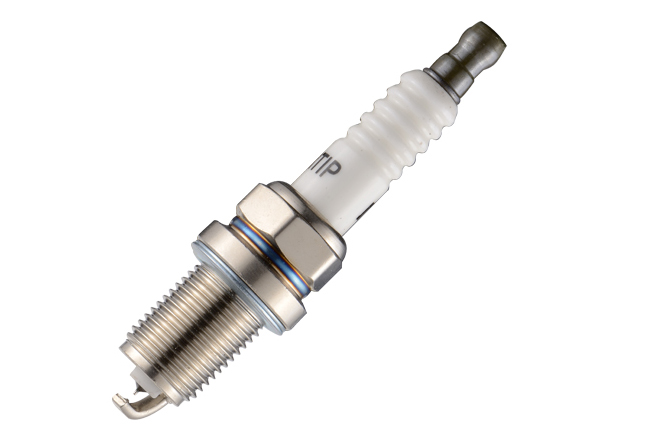 Hex size 16mm automotive spark plugs thread size 14mm K7RTIPCenter electrode:Iridium-tipped ElectrodeView Product →
Two plugs can both be light tan and still be wrong. Heat range is the plug's ability to move heat from the insulator nose into the shell and the cylinder head. A plug that is too hot for the engine will blister the insulator and blue the shell; too cold, and the nose soots up no matter how long you drive.
Iridium makes this check more important, not less. Because the fine wire tip erodes so slowly, the tip hides the early signs of an over-hot plug. By the time the gap widens, the insulator may already be blistered and the ground electrode worn to a stub. Gas-fuelled engines show the difference faster, because CNG and LPG burn hotter and drier — which is why so many of those applications specify a colder, iridium-tipped plug.
If the reading shows a clean tip with a blistered insulator, or a sooted tip that comes back after a long highway run, you are looking at a heat range problem rather than a mixture problem. A plug such as the K6REJI, with a heat range matched to the engine rather than to the shelf, is the starting point for correcting it.
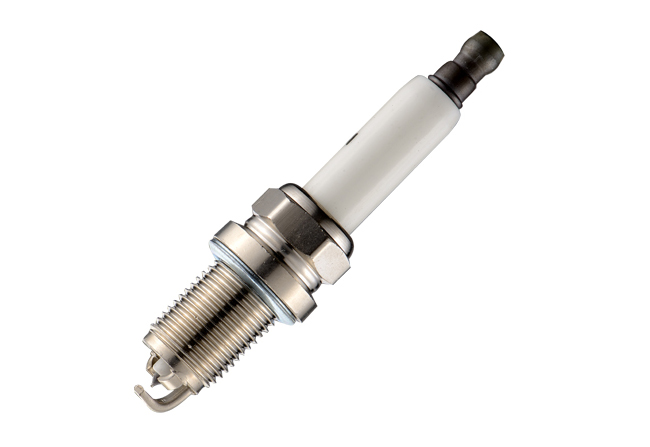 Thread size 14mm automotive spark plugs K6REJICenter electrode:Iridium-tipped ElectrodeView Product →
Torque matters more on iridium plugs because the fine tip is unforgiving of a poor seal. A 14 mm gasketed plug commonly takes around 20 to 30 N·m, while taper-seat plugs take noticeably less. Use the figure printed by the vehicle maker, and never fit a plug into a hot aluminium head.
Treat those intervals as a guide rather than a rule. Plenty of iridium plugs are replaced on mileage while they are still electrically healthy, and plenty are left in place long past the point where the shell has started to seize in the head.
When you buy replacements, the four matching dimensions — thread size, thread reach, hex and heat range — matter far more than the name on the box. As a spark plug manufacturer covering automotive, marine, motorcycle, garden, industrial and aircraft-model engines, Ningbo Marshal builds one-stop spark plug solutions across those categories, which makes it easier to keep one heat range discipline across a mixed fleet instead of chasing part numbers from several suppliers. If your reading points to a worn fine-wire tip and the heat range is correct, an iridium plug such as the K8RKAIP is a straightforward swap.
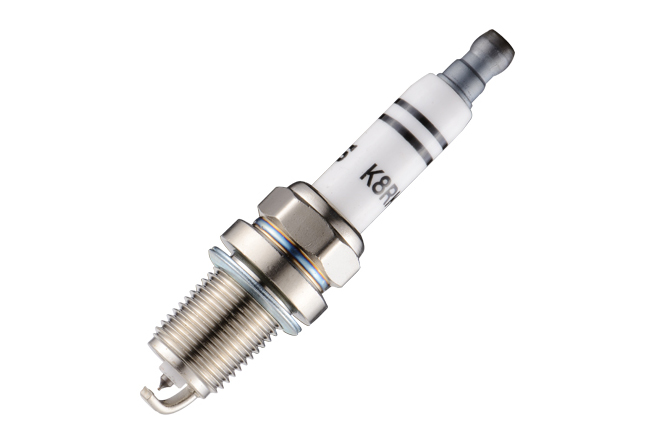 Automotive Spark Plugs K8RKAIPWe have a strong R&D team, and we can develop and produce according to the drawings or samples the customers offered.View Product →
The reliable signs are a gap wider than the maker's specification, a rounded or missing iridium pad, or a misfire code on one cylinder. Colour alone is not enough — a plug can look tan and still be out of specification.
A healthy plug reads light tan or grey-brown, dry and matte, with no crusty build-up. Dry black soot means a rich mixture or too many short trips, wet black means oil, and white or blistered means overheating.
Published aftermarket ranges put iridium at roughly 80,000 to 120,000 km, against about 30,000 to 50,000 km for nickel plugs. The vehicle maker's schedule overrides both, especially on turbocharged or gas-fuelled engines.
You can measure the gap with a wire feeler gauge, but you should not lever the centre electrode — the iridium pad is laser-welded and can crack. If the gap is wrong, replace the plug.
For most modern engines iridium wins, because the fine tip fires at a lower voltage and holds its gap longer. Platinum remains a sound middle option for older engines. Match the heat range first; the material comes second.
A single fouled plug points to a cylinder-specific fault: a leaking injector, a weak coil, worn valve guides or low compression. Start with a compression test, then swap the coil and see whether the fault moves.
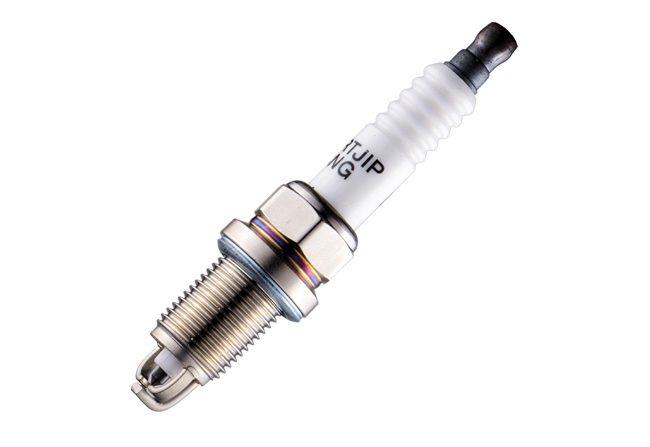
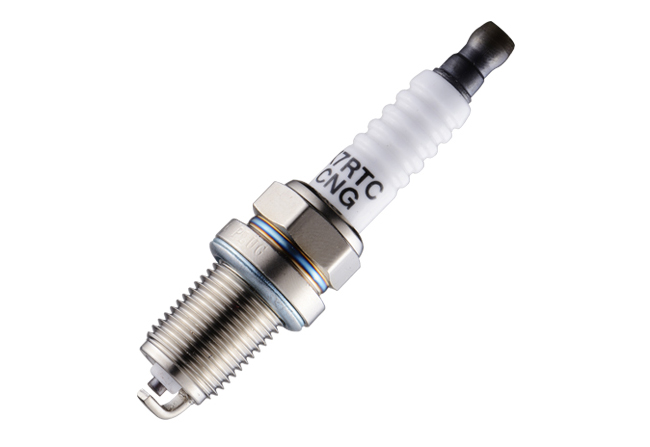
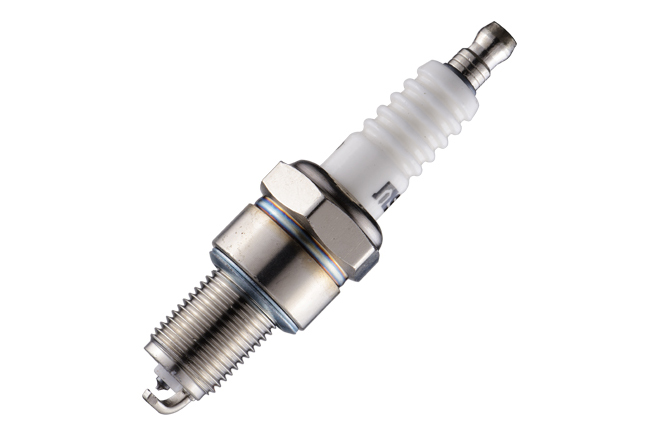
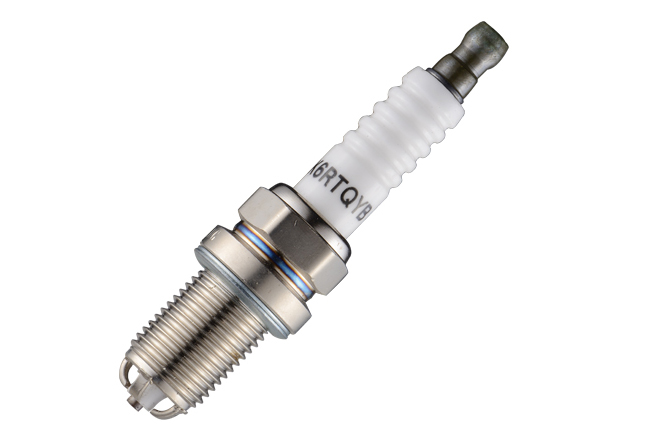
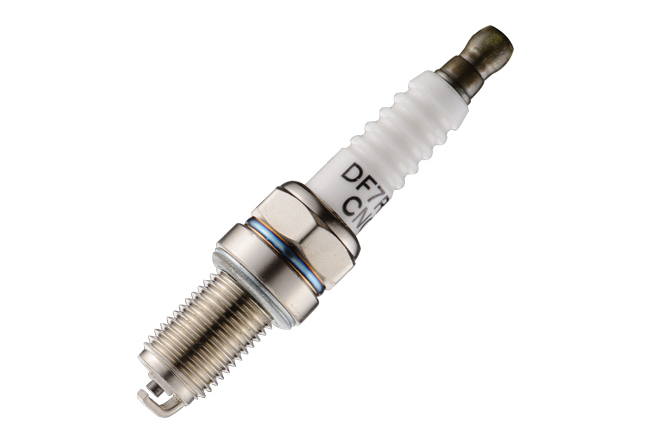


NINGBO MARSHAL AUTO PARTS CO., LTD. is a research and development, production and sales of professional manufacturers of spark plugs. Our company's spark plugs are mainly used in gasoline, natural gas and liquefied petroleum gas as fuel for all types of automobiles.
COPYRIGHT NINGBO MARSHAL AUTO PARTS CO., LTD. ALL RIGHTS RESERVED. Custom Spark Plugs Manufacturers OEM Spark Plugs Suppliers


 English
 中文简体
中文简体