The short answer: a spark plug number is not a universal ID; it is a compact fit-and-heat code. It tells you the thread family, reach, seat, hex, heat range and often a resistor or electrode feature. A plug with the same thread can still overheat, foul, or hit a piston if the rest of the code is wrong.
A parts counter conversation makes the risk concrete. A customer brings in a fouled plug, reads the number, and asks for “the same one.” The number may identify a 14 mm, 19 mm-reach resistor plug in one system, while the same characters in another manufacturer’s chart point to a different reach or a colder heat range. The reliable move is to decode the code against the engine maker’s fitment chart, then verify the physical dimensions with a caliper or thread gauge before installation.
Content
Most numbering systems pack six decisions into a short string. The exact positions change, but the categories do not.
Common sizes include M10×1.0, M12×1.25 and M14×1.25. The pitch matters as much as the diameter; forcing the wrong thread damages the cylinder head.
Reach is the distance from the seating surface to the end of the thread. Common values are 12.7 mm, 19 mm and 26.5 mm. Too much reach can contact a piston; too little recesses the spark.
A gasket seat and a taper seat seal differently. Using the wrong seat can leak compression, damage the head, or change how heat leaves the plug.
16 mm, 20.8 mm and 22.2 mm are common. Hex size affects socket access and torque accuracy, especially on recessed or narrow engine bays.
The middle number usually carries the heat value. It controls how quickly the firing tip sheds heat, which affects fouling, pre-ignition and service life.
Letters can mark a resistor, suppression, nickel, platinum or iridium electrode, or a special gap. These details affect EMI, wear rate and gap stability.
The number is a lookup key, not a language. Two plugs can share a thread diameter and still differ in reach, seat angle, insulator projection, heat range and suppression. That is why a visual match at the counter is not enough.
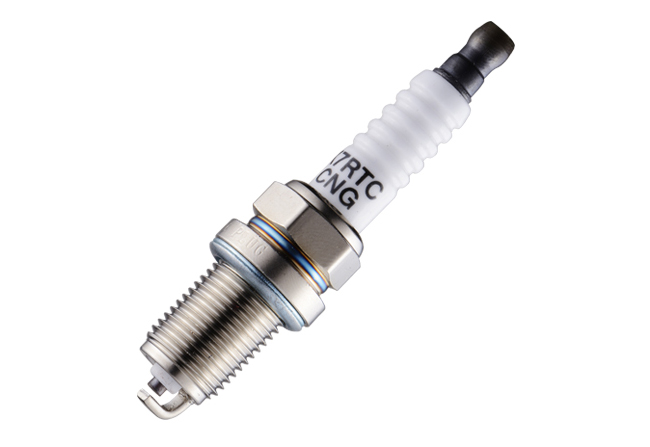
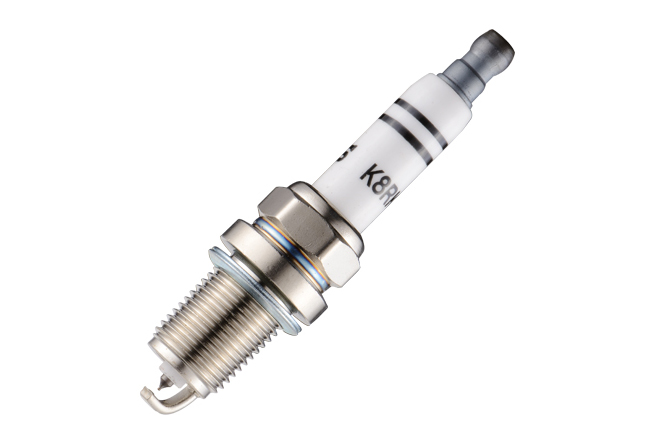
In our automotive range, a code such as K6RTC follows this pattern: a 14 mm thread family, a middle heat-range digit, a resistor marker and a suffix that carries reach or seat detail. The suffix is where generic decoding fails; confirm it against the engine maker’s chart.
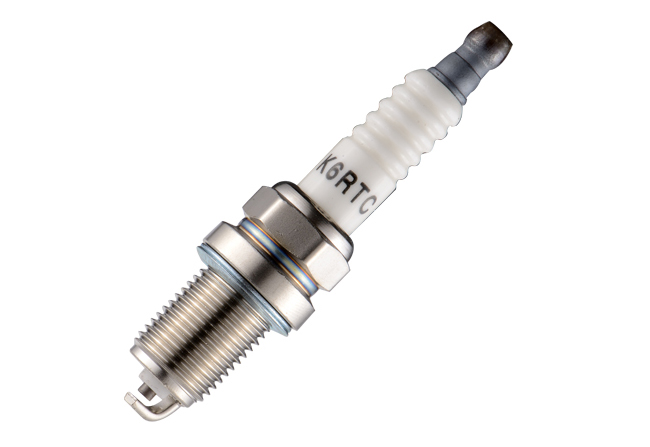 Custom Automotive Spark Plug K6RTCCustom automotive spark plug suited to reviewing the K6RTC code pattern and confirming suffix details against the engine maker's chart.View Product →
Heat range is the plug’s ability to shed heat from the firing tip into the cylinder head. It is not the temperature of the spark. A hotter plug keeps more heat in the tip; a cooler plug transfers heat away faster. The middle digit usually carries this value, but the direction depends on the numbering system.
Two plugs can both be “6” and behave differently. In many Asian-origin systems, a lower number is hotter; in many European and US-origin systems, a higher number is hotter. That is why a cross-reference table that only maps “6 to 6” is a procurement risk, not a shortcut. According to manufacturer technical charts, the heat range must be matched to the engine’s cooling, compression, fuel and load profile. A plug that is one step too hot can contribute to pre-ignition under sustained load; one step too cold can foul in stop-start service.
For a concrete comparison, read how heat range affects engine operation and fuel efficiency, then check the plug’s reach and seat before ordering.
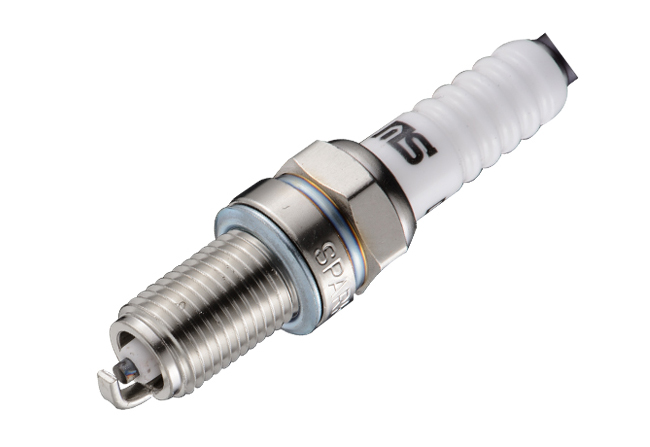
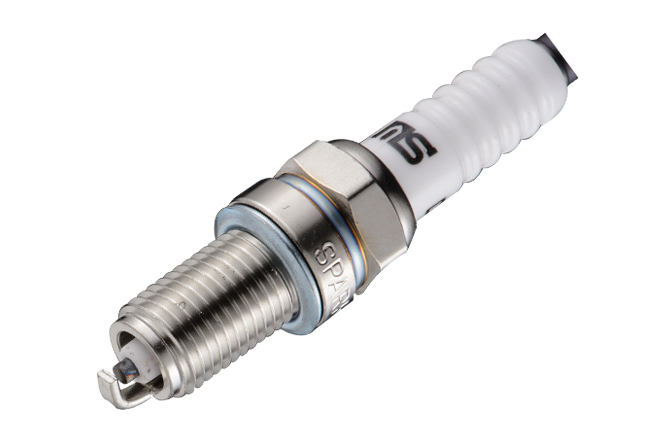
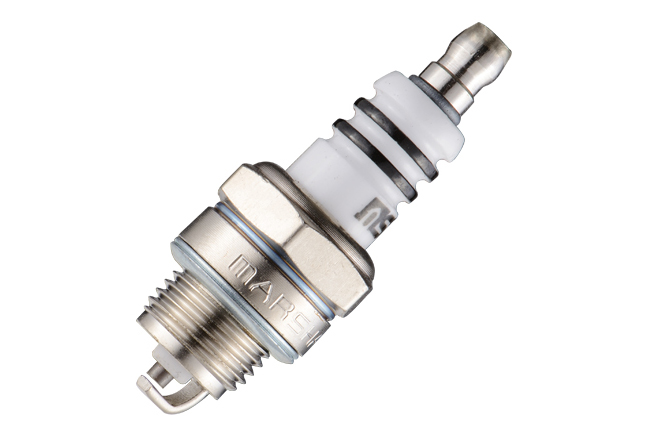 MS-MARSHAL L7T Lawn and Garden Spark PlugLawn and garden spark plug with 9.5 mm reach and 14 mm thread, useful for checking reach, seat, and hex before relying on heat range.View Product →
Cross-referencing by heat range alone is where most buying errors start. A plug can share the same heat number and still have the wrong reach, seat or hex. Use this order:
| Code element | What it controls | Typical values | If mismatched |
|---|---|---|---|
| Thread diameter | Physical fit into the head | M10×1.0, M12×1.25, M14×1.25, M18×1.5 | Cross-threading, loose fit or head damage |
| Reach | How far the firing end enters the chamber | 12.7 mm, 19 mm, 26.5 mm | Piston contact or recessed spark |
| Seat | Gasket or taper sealing method | Gasket seat, taper seat | Compression leak or poor heat transfer |
| Hex | Socket size and torque access | 16 mm, 20.8 mm, 22.2 mm | Socket access problems and torque error |
| Heat range | Heat shedding from the tip | Low, mid or high number depending on system | Fouling or pre-ignition |
| Resistor and electrode | EMI suppression, wear rate and gap stability | R, nickel, platinum, iridium | Electrical noise, gap growth or short life |
For an automotive example, the automotive spark plug range shows how the same thread family can carry different reaches and electrode designs. The dimensional check is still the first gate; heat range is the second.
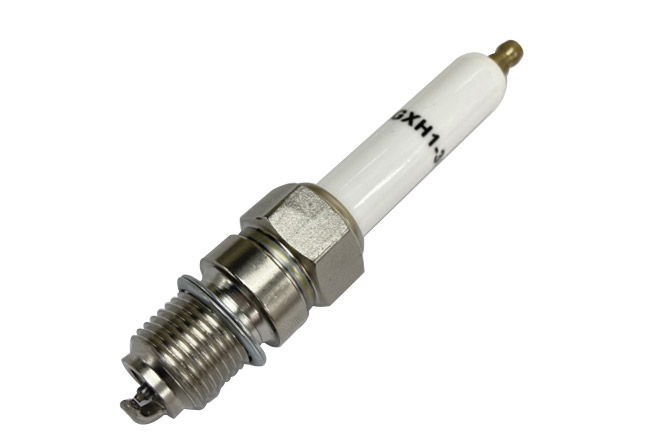 MS-MARSHAL GXH1-30 Industrial Spark PlugIndustrial spark plug with 18 mm thread, 22.2 mm hex and heat range 6, suited to dimensional and thermal checks before procurement.View Product →
Procurement risk is highest when a buyer treats a part number as a SKU match. A better workflow is dimensional, thermal and documentary:
Our own laboratory runs 17 international and national test standards and more than 34 OEM-level internal checks, so a dimensional question can be traced back to a measurement record rather than a catalog guess. That is the difference between a replacement plug and a reliable fit.
It is a code for thread size, reach, seat, hex, heat range and sometimes resistor or electrode type. The exact positions vary by manufacturer, so decode it with the maker’s chart.
It depends on the system. In many Asian-origin systems, a lower number is hotter; in many European and US-origin systems, a higher number is hotter. Never assume “higher means hotter” across brands.
No. Thread diameter is only one dimension. A different reach can hit a piston or recess the spark; a different heat range can foul or pre-ignite. Match reach, seat, hex and heat range.
Heat range is the plug’s ability to shed heat; gap is the distance between the center and ground electrodes. Both affect ignition, but heat range is a thermal match and gap is an electrical setting.
Cross-reference dimensions first, then heat range, then resistor and electrode. Use the engine maker’s chart and verify with a caliper, thread gauge and the old plug. A generic online cross-reference is a starting point, not a final approval.
Mild mismatch can cause misfire, fouling, poor fuel economy or hard starting. Severe mismatch, such as too much reach, can cause piston or valve contact. Too hot a range can contribute to pre-ignition under load.
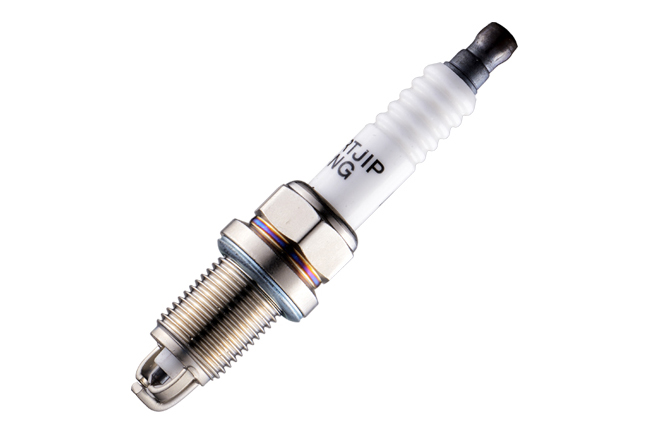

NINGBO MARSHAL AUTO PARTS CO., LTD. is a research and development, production and sales of professional manufacturers of spark plugs. Our company's spark plugs are mainly used in gasoline, natural gas and liquefied petroleum gas as fuel for all types of automobiles.
COPYRIGHT NINGBO MARSHAL AUTO PARTS CO., LTD. ALL RIGHTS RESERVED. Custom Spark Plugs Manufacturers OEM Spark Plugs Suppliers


 English
 中文简体