Pull a spark plug from an engine that has been idling badly, and you will often find a dry black coating on the insulator and electrodes. Before you clean it, look at it. That coating is a record of what happened inside the cylinder, and in many cases the plug tells you more than a scan tool about mixture, timing, oil control and heat range. This spark plug reading guide explains how to inspect the firing end systematically, what normal and abnormal appearances mean, and how to use the findings to choose the correct replacement plug.
Content
A plug only produces a trustworthy reading after the engine has reached normal operating temperature. A two-minute drive or five minutes of idling creates a false cold-fouling pattern, and a plug pulled after a short trip may look black even when the engine is healthy. Work the engine under normal load for at least ten minutes before you remove the plug.
The exact procedure matters more than the filter in a photo. If one cylinder is causing the symptom, read that plug separately and compare it with a healthy cylinder in the same engine.
Reading is easier when you can name each part. The terminal connects to the ignition wire or coil boot. The ribs reduce flashover across the insulator. The insulator nose is the main temperature indicator. The shell and hex let a wrench seat the plug, and the threads seal into the cylinder head. At the firing end, the center electrode and the ground electrode form the spark gap where ignition begins.
Exploded diagram of the main spark plug parts; the insulator nose and firing end carry most of the diagnostic information.
In daily practice, start with the insulator nose and ground strap. They react quickly to mixture and heat range. Then check the gap and electrode wear, because a plug can look normal in color and still be at the end of its service life.
A healthy plug shows a light tan, grey or light brown deposit on the insulator nose and a thin, even layer on the ground strap and center electrode. The electrode edges are still crisp, and the gap has not grown beyond the engine specification. After long service, a little harmless ash on the shell is also normal.
A normal color means the air-fuel mixture, ignition timing and heat range are working together. If the plug is too hot or too cold, the color changes long before the engine knocks or misfires, which is why reading is best done on a plug you trust.
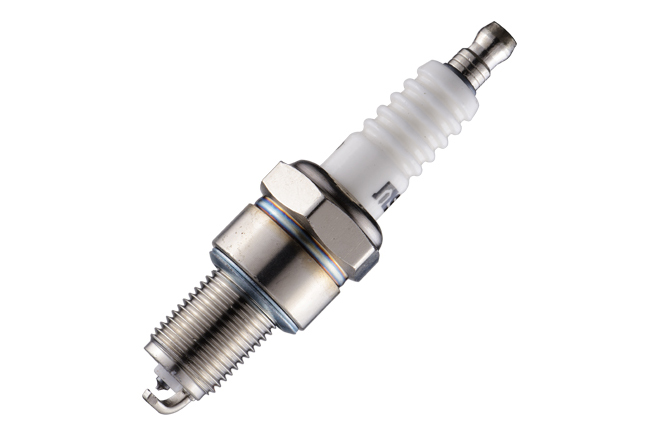
For a known-good baseline on ordinary four-stroke petrol engines, a standard copper-core plug such as our F7RTC copper-core spark plugs behaves predictably and makes it easier to spot the first signs of deposit buildup.
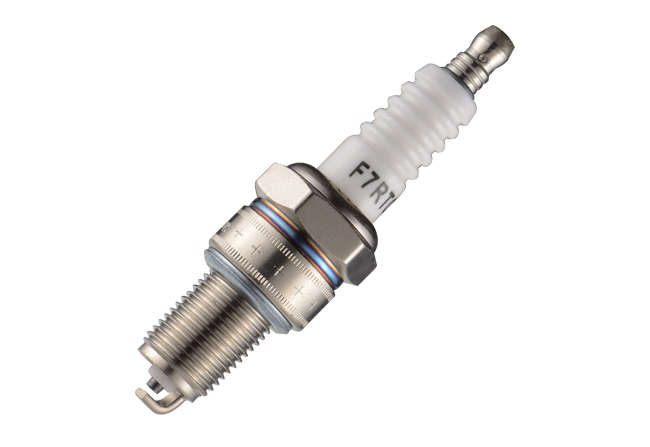 Custom Thread size 14mm automotive spark plugs F7RTC Suppliers, OEM Company - NMarshal Auto Parts Co., Ltd is China OEM Thread size 14mm automotive spark plugs F7RTC suppliers and company, Professional custom Thread...View Product →
Once the reading conditions are correct, compare what you see with the following patterns. Use the whole insulator, not just the tip, because fuel and oil fouling often leave a wider deposit layer.
| Appearance | Condition | Likely cause |
|---|---|---|
| Light tan / grey-brown deposits | Normal operation | Correct mixture and heat range |
| Dry black soot on insulator and electrodes | Carbon fouled | Rich mixture, short trips, clogged air filter, weak ignition, or plug too cold |
| Wet black oily film with blue/grey ash | Oil fouled | Worn valve guides, valve seals, or piston rings |
| White or blistered insulator, burned or melted electrodes | Overheating | Lean mixture, advanced timing, cooling system fault, or plug too hot |
| Speckled insulator with tiny metallic flakes | Detonation (knock) | Low-octane fuel, too much ignition advance, lean mixture, or high compression |
| Rounded center electrode, thinned ground strap, enlarged gap | Worn electrode | Normal service life reached; replace with the same heat range |
| Crusty white, red or brown ash on insulator | Ash deposits | Fuel or oil additives, low-quality fuel, or burning oil |
When a plug shows more than one pattern, the most severe one should guide the repair. A wet oily plug with heavy soot points to oil control first, while a dry sooty plug with sharp electrodes points to mixture or driving cycle. For failures that look intermittent, the article on diagnosing faults by checking spark plugs walks through the next steps.
Heat range determines how quickly the insulator nose sheds heat. A plug that runs too cool stays below the self-cleaning temperature and collects carbon. A plug that runs too hot lets the insulator nose climb into the pre-ignition risk zone. The chart below shows the practical working band.
Insulator tip temperature rises as the plug heat range becomes hotter; the self-cleaning band between roughly 450 and 870 degrees Celsius is widely cited in spark plug engineering guides.
That is why reading an overheated or fouled plug often comes down to a heat range mismatch. When the insulator looks white or glazed, compare the number on the plug with the factory recommendation before blaming the fuel system. Mixing heat ranges across cylinders creates readings that are impossible to compare.
Every spark erodes a tiny amount of electrode metal. As the gap opens, ignition voltage demand rises and misfires start. Electrode material is the main factor that decides how long the gap stays in spec, and the chart below compares the typical service intervals used in manufacturer technical guides.
Typical service intervals cited by spark plug manufacturers; confirm with the vehicle maintenance schedule and driving conditions.
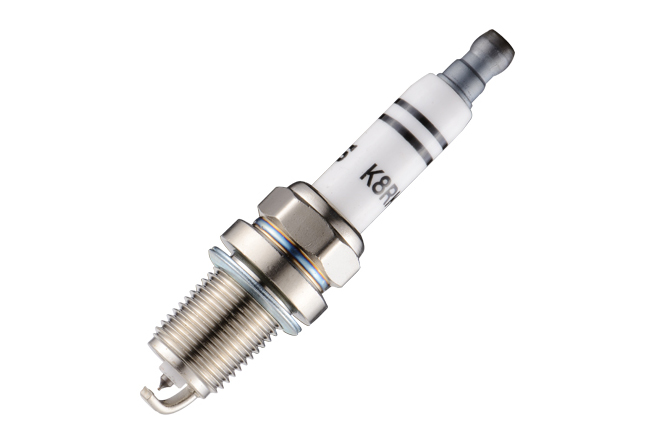
A plug with a correct color but a visibly opened gap is still worn out. That is why the gap check is part of any complete reading. For engines that demand long intervals, iridium electrodes hold their gap much longer than copper or nickel, as in our K7RTI iridium spark plugs. The trade-off is cost, and the benefit is fewer reading-and-cleaning cycles over the life of the plug.
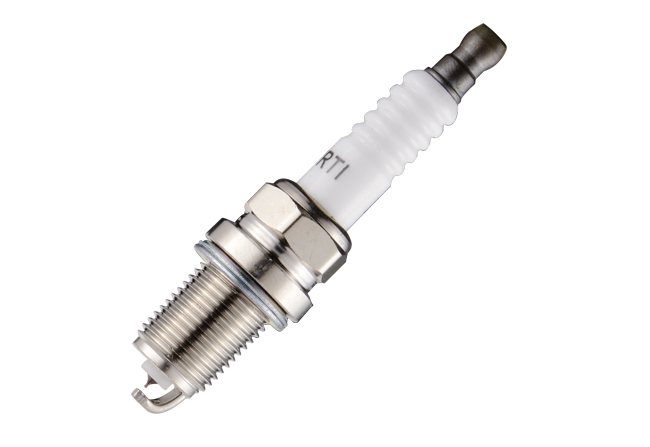 Custom Hex size 16mm automotive spark plugs K7RTI Suppliers, OEM Company - NingMarshal Auto Parts Co., Ltd is China OEM Hex size 16mm automotive spark plugs K7RTI suppliers and company, Professional custom Hex size ...View Product →
Even a good chart gives a wrong answer if the test conditions are wrong. The most common errors we see in workshops and home garages are these:
These are the questions that come up most often when drivers and mechanics begin reading spark plugs.
A light tan or grey-brown tip usually means the air-fuel mixture is right, the heat range matches the engine and combustion is normal.
Dry black soot indicates a rich mixture, short trips, a clogged air filter, weak ignition, or a spark plug that is too cold for the engine.
You can clean light carbon deposits and regap a plug if the electrodes are still in good shape, but replace anything worn, damaged, or running in the wrong heat range.
Typical service life is 20,000 to 30,000 km for copper and nickel, up to about 60,000 km for single platinum, and up to around 100,000 to 120,000 km for iridium designs.
A gap that is too small causes weak sparks and high-speed misfire, while a gap that is too large stresses the ignition coil and causes cold misfire; always use the engine maker's gap specification.
Too cold a heat range produces carbon fouling and a sooty insulator, while too hot a heat range creates overheating and pre-ignition signs; reading charts are only accurate when the heat range is correct.
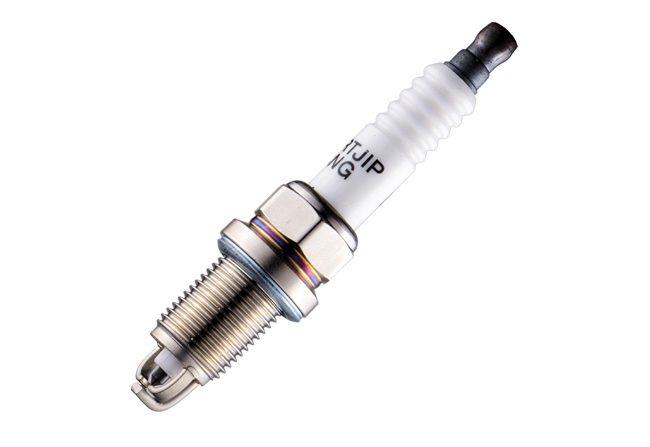
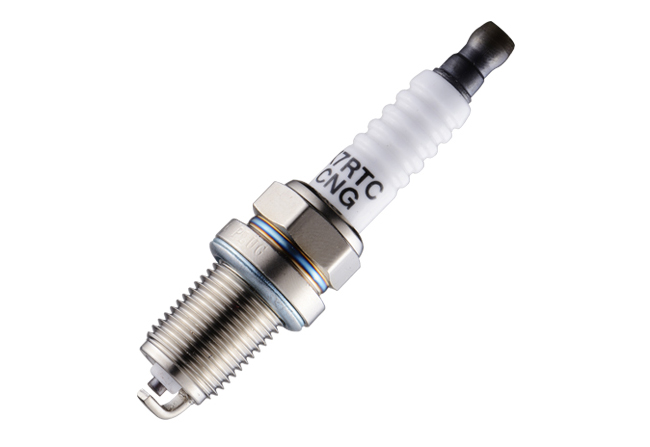
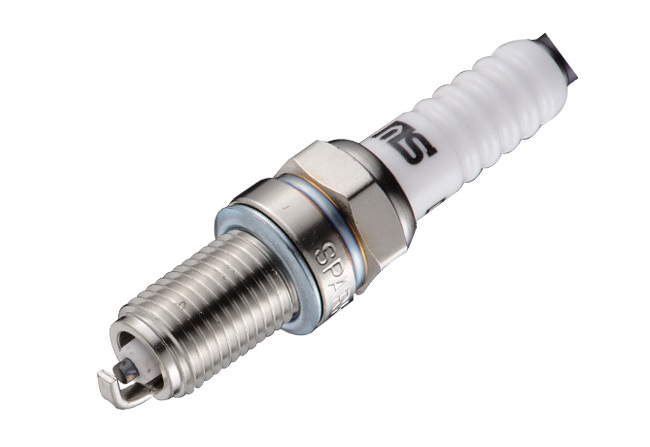
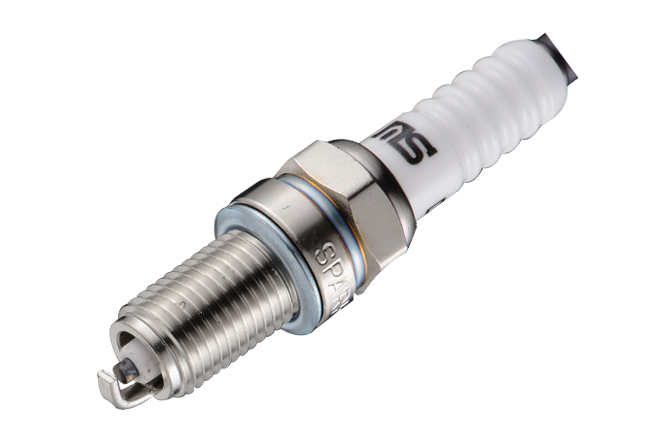

NINGBO MARSHAL AUTO PARTS CO., LTD. is a research and development, production and sales of professional manufacturers of spark plugs. Our company's spark plugs are mainly used in gasoline, natural gas and liquefied petroleum gas as fuel for all types of automobiles.
COPYRIGHT NINGBO MARSHAL AUTO PARTS CO., LTD. ALL RIGHTS RESERVED. Custom Spark Plugs Manufacturers OEM Spark Plugs Suppliers


 English
 中文简体
中文简体