You have just pulled the spark plug out of a chainsaw that has been losing power, and the insulator is covered in dry black soot. Before you blame the carburettor, look again. That coating is the two-stroke engine reporting its air-fuel mixture, oil delivery and ignition in colour. Reading 2 stroke spark plug colour is the fastest low-cost diagnostic you can carry out in a workshop or on a driveway, and it works on almost any two-stroke: motocross bikes, scooters, chainsaws, strimmers, outboards and model aircraft engines.
The rule is simple. Tan, light brown or mocha is healthy. Black usually means too rich or too much oil. White or grey-white points to a lean mixture or overheating. Grey ash can still be normal with certain oils. The rest of this guide explains the shades in detail, shows you how to read a plug correctly, and highlights the parts that matter.
Content
A two-stroke plug that has run under load for a few minutes should show a dry, even colour on the ceramic insulator nose. NGK's official spark plug reading guide describes the healthy condition as a light tan or grey at optimum operating temperature. Two-stroke owners on ThumperTalk summarise the jetting target as a medium-dark mocha brown or tan. Saw mechanics on Arboristsite add an important detail: both brown and grey can be correct depending on the oil. So the healthy band is wider than many riders and mower owners expect.
The chart below shows the six colour bands you will most often see. Use it as a first reference, then check the table in the next section for causes and next steps.
Once you move away from the healthy tan and grey band, the diagnosis becomes more specific. Four patterns account for almost every two-stroke plug complaint.
Dry, powdery black soot on the insulator and electrode usually means the fuel mixture is too rich, the carburettor jetting is oversized, or the air filter is restricted. A weak spark can also produce the same soot because the mixture does not fully burn. This is the most common reason a chainsaw or scooter plug comes out black.
If the plug is wet and oily, the problem is oil control rather than jetting alone. The oil ratio may be too rich, the crank seal may be leaking, the piston rings may be worn, or the automatic oil pump may be feeding too much oil to the crankcase. Wet fouling is more serious because it can cause misfire under load.
A white, chalky insulator is a warning sign. It usually means a lean air-fuel mixture, an air leak at the crankcase or carburettor flange, or a spark plug with a heat range that is too hot for the engine. On water-cooled outboards, a blocked cooling passage can produce the same overheating signature. Stop the engine and investigate before continuing.
A melted centre electrode, a blistered nose, or severe electrode erosion means the plug has seen very high temperatures. This can come from sustained pre-ignition, a drastically lean setting, or installation of the wrong heat range. A melted plug is not a tune-up item; the engine needs to be rebuilt or at least thoroughly checked before it is used again.
| Colour / appearance | What it means | Common cause | First step |
|---|---|---|---|
| Tan or light brown | Normal operation | Correct mixture | No action needed |
| Grey ash | Normal with oil ash | Oil additives | No action unless heavy |
| Dry black soot | Rich mixture or weak spark | Rich jetting, dirty air filter, weak ignition | Clean filter, check spark, verify jetting |
| Wet oily black | Excess oil entering combustion chamber | Oversized oil ratio, leaking crank seal, worn rings | Check oil pump and oil mix, pressure test |
| White or chalky | Lean mixture or overheating | Air leak, lean jet, cooling problem, hot heat range | Stop running, inspect air leaks, fit colder plug |
| Melted or blistered electrode | Severe overheating or pre-ignition | Wrong heat range, very lean fuel, pre-ignition | Inspect engine condition before running again |
In a four-stroke engine, the spark plug colour mostly tells you about fuel and ignition. In a two-stroke, the lubricant is burned with the fuel, and its additive package leaves ash on the insulator and electrodes. A plug that comes out coffee-and-cream after one tank may come out grey after switching to a different synthetic oil. That is why experienced saw mechanics insist that both brown and grey are acceptable readings.
Temperature controls how much ash accumulates. NGK heat range material places the self-cleaning temperature of the insulator tip at around 450 degrees C; below that, carbon and ash build up quickly. Above roughly 900 degrees C, the ceramic nose becomes hot enough to cause pre-ignition. The ideal running band sits between those two figures, which is why a plug should be read after a proper load run, not after five minutes of idling.
This also explains why the same engine can show a different colour in summer and winter. Colder intake air changes the mixture slightly, and different fuels change the ash profile. Treat the colour chart as a guide, not a laboratory measurement.
A colour reading is only as good as the procedure. Follow these steps every time so that the colour reflects the tune instead of your test routine.
Most false readings come from checking the plug after long idling. At idle, the insulator tip sits below the self-cleaning temperature, so the nose can look dark and sooty even on a perfectly tuned engine. The load run burns that layer off and gives an honest colour. Once you know the colour, you can start diagnosing faults by checking spark plugs more systematically.
Two-stroke colour diagnosis is not theory. Three real-world applications cover most of the engines that leave users puzzled.
Dirt bikes and scooters are jetted by the rider, so the plug is the feedback instrument. A plug that reads tan after a full-throttle climb tells you the main jet is safe. If it reads dry black, drop the main jet or clean the air filter before tuning further. For frequent plug checks, many workshops prefer a plug with a predictable heat range, such as a heat-rated motorcycle spark plug, because the colour pattern stays consistent between checks.
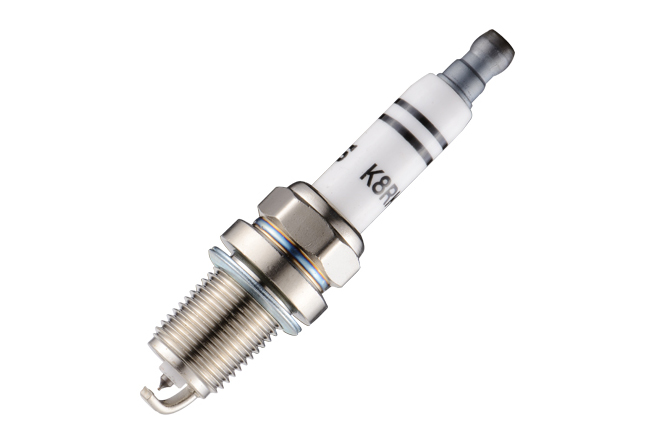
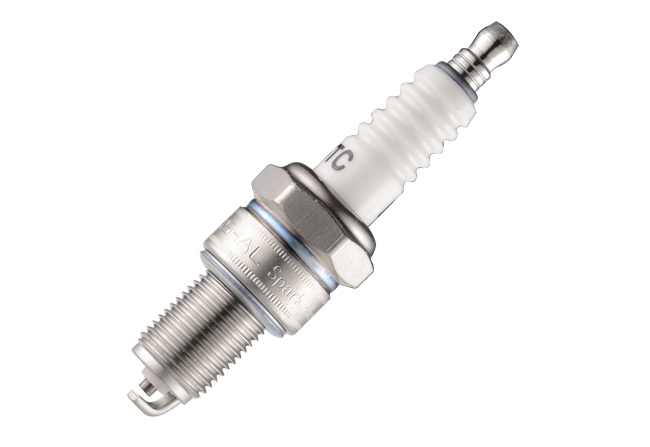 Custom Hex size 20.8mm motorcycle spark plugs F6TC Suppliers, OEM Company - NingMarshal Auto Parts Co., Ltd is China OEM Hex size 20.8mm motorcycle spark plugs F6TC suppliers and company, Professional custom Hex size ...View Product →
Small air-cooled two-strokes are sensitive to fuel and oil quality. A chainsaw that shows dark soot after light cutting may simply be idling too long between cuts. For these engines, the grey band matters as much as the brown one. Fitting a dedicated lawn and garden spark plug designed for small engines gives you a cleaner baseline for reading the tune.
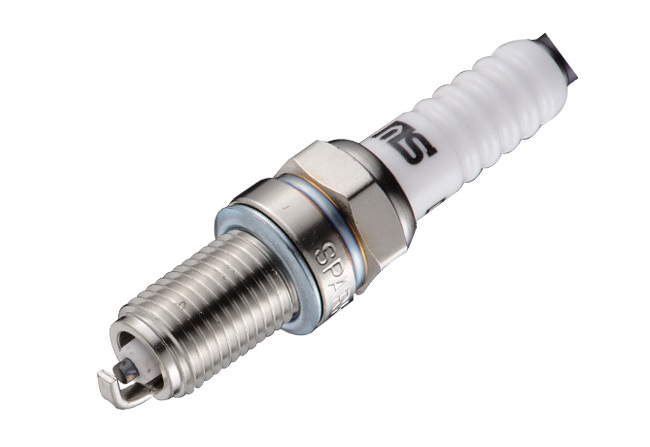
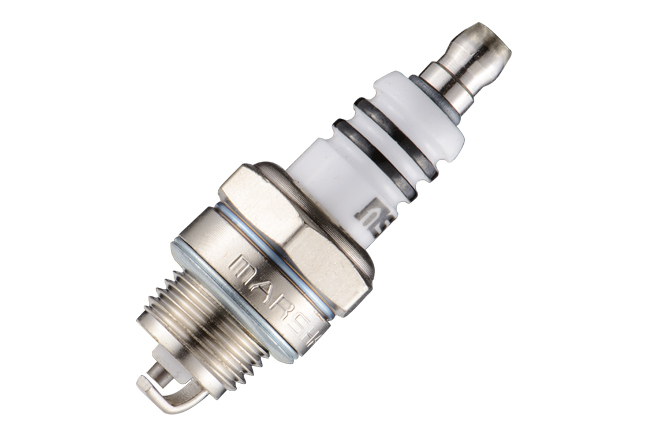 Custom Lawngarden spark plugs reach 9.5mm L7T Suppliers, OEM Company - Ningbo Marshal Auto Parts Co., Ltd is China OEM Lawngarden spark plugs reach 9.5mm L7T suppliers and company, Professional custom Lawngarden s...View Product →
Marine two-strokes run in a humid, salty environment, so corrosion can look like fouling. Grey and brown tints from marine oil are common. On a boat, always dry the threads before inspection. A corrosion-resistant marine spark plug helps keep the reading honest because rust deposits do not form on the electrode. If you see a perfect brown colour but the engine still misfires, review the common reasons spark plugs fail early before changing the jetting.
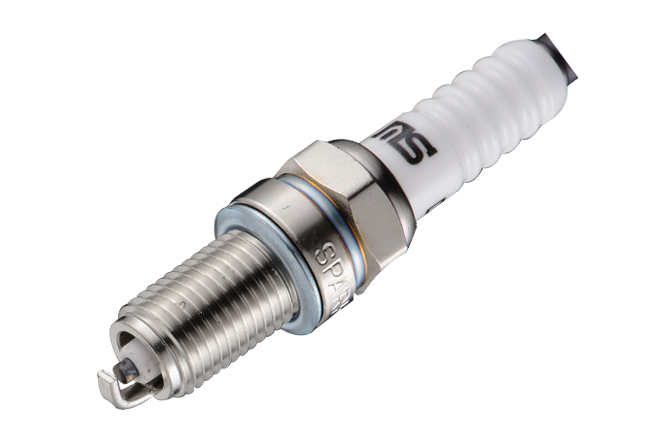
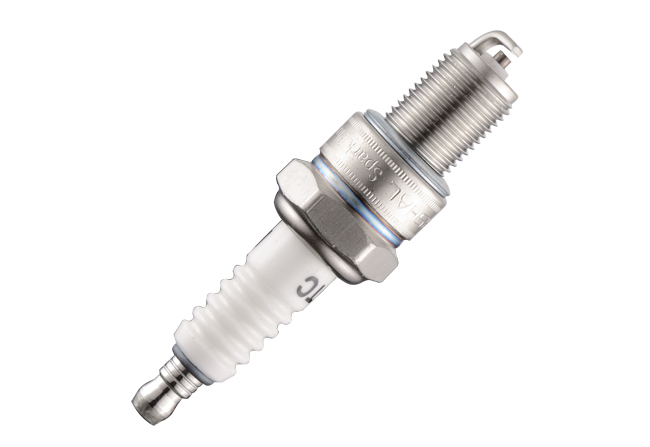 Custom Marine spark plugs reach 19mm F6TC Suppliers, OEM Company - Ningbo MarshMarshal Auto Parts Co., Ltd is China OEM Marine spark plugs reach 19mm F6TC suppliers and company, Professional custom Marine spark plug...View Product →
Q1. What colour should a 2 stroke spark plug be?
A healthy 2 stroke spark plug should be tan or light brown after a proper load run. A light grey colour is also normal because the oil burns with the fuel and leaves ash. Black or white indicates a problem.
Q2. Why is my 2 stroke spark plug black?
Dry black soot usually means the mixture is too rich, the air filter is dirty, or the ignition is weak. Wet black oil means too much oil is entering the combustion chamber, possibly from a bad crank seal or worn rings.
Q3. Why is my 2 stroke spark plug white?
A white or chalky plug indicates a lean mixture, an air leak, or overheating. It can also mean the plug heat range is too cold for sustained high-load running. Stop the engine and check for air leaks before continuing.
Q4. What does grey mean on a 2 stroke spark plug?
Grey is normally the ash residue from two-stroke oil additives. It is considered an acceptable tune with many modern oils, especially synthetics. If the grey is chalky and heavy, check whether the oil ratio has been mixed too rich.
Q5. How do I fix a rich 2 stroke?
Start with the simple causes: clean or replace the air filter, verify the fuel-to-oil ratio, and check the carburettor jetting. A weak spark can also mimic a rich mixture, so confirm that the ignition coil and plug lead are in good condition.
Q6. How often should I replace a 2 stroke spark plug?
There is no single interval. Replace the plug when the electrode is rounded, the ceramic nose is cracked, or the engine misfires despite a clean and correctly gapped plug. Checking the colour at every fuel-related maintenance job is a good habit.
Reading 2 stroke spark plug colour takes less than two minutes and can save you a whole day of guesswork. Stick to the correct procedure, read the insulator nose after a load run, and compare the colour against the band chart. If the plug shows tan, mocha or light grey, your mixture is in the safe window. If it shows black soot, white chalk or wet oil, work through the table in the order shown. A plug is a sensor; treat its colour as the first answer, then verify with the rest of the engine.
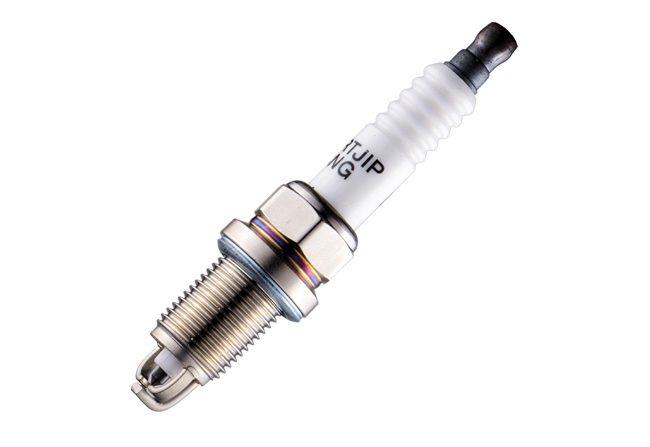

NINGBO MARSHAL AUTO PARTS CO., LTD. is a research and development, production and sales of professional manufacturers of spark plugs. Our company's spark plugs are mainly used in gasoline, natural gas and liquefied petroleum gas as fuel for all types of automobiles.
COPYRIGHT NINGBO MARSHAL AUTO PARTS CO., LTD. ALL RIGHTS RESERVED. Custom Spark Plugs Manufacturers OEM Spark Plugs Suppliers


 English
 中文简体
中文简体