Content
You remove the first spark plug after a few hundred kilometres of mixed driving, and the ceramic nose is chalky white instead of the familiar tan or grey. There is no check-engine light, no rough idle — just an uncomfortably clean tip.
The short answer: a white spark plug tip means the engine is running hotter than designed. In most cases the cause is a lean air-fuel mixture or a spark plug whose heat range is too hot for the engine. Over-advanced ignition timing and cooling faults produce the same chalky mark less often, but they damage the engine just the same.
The longer explanation matters because the fix is rarely the plug itself. Replacing a white-tipped plug without correcting the mixture, timing, or heat-range specification is like resetting a warning light and ignoring the sensor behind it. To identify exactly which system is at fault, treat the plug as a recording device and read it in order: colour first, electrodes second, engine systems third.
Deposits on the insulator nose are a combustion log. A normal plug shows a light tan or grey powder left by fuel additives. A black, sooty tip points to a rich mixture, oil consumption, or incomplete combustion. A white tip means the opposite extreme: combustion is hot enough to burn off carbon completely, leaving the ceramic looking washed out and, in severe cases, blistered.
When the air-fuel mixture is lean — too much air, not enough fuel — the flame burns hotter and the insulator nose temperature climbs above roughly 850 °C. At that point the ceramic self-cleans and takes on a chalky white appearance. Lean operation also raises the risk of detonation, which is why a plug that looks beautifully clean can be one step away from piston damage.
The spark plug is also a heat exchanger. It pulls heat out of the insulator nose, through the shell and threads, and into the cylinder head. A plug specified one step too hot keeps more of that heat inside the tip, so it can run white even on a correctly metered mixture. This is why fitting "whatever is on the shelf" can create a white tip that was never there before.
Where the white signs appear: the insulator nose, the center electrode, and the ground electrode all carry a thermal record.
Once you confirm the tip is white, check the engine systems below. Do not assume the plug is defective; it is reporting a condition.
| Cause | What happens | Quick check |
|---|---|---|
| Lean air-fuel mixture | Excess air raises flame temperature; the insulator self-cleans and turns chalky. | Read short and long fuel trim; test fuel pressure. |
| Vacuum or intake air leak | Unmetered air leans the mixture at idle and light throttle. | Spray safe cleaner near gaskets and hoses; listen for idle change. |
| Over-advanced ignition timing | Early ignition raises cylinder pressure and electrode temperature. | Set base timing with a timing light against the under-hood label. |
| Spark plug heat range too hot | The plug withdraws less heat, so the tip runs above its design range. | Compare the plug code with the engine maker's specification. |
| Cooling system fault | High coolant temperature raises wall and plug temperature together. | Confirm coolant level, thermostat opening, and fan cycling. |
| Low fuel pressure or clogged injectors | Insufficient fuel delivery creates a lean condition under load. | Fit a gauge and read pressure at idle and at wide-open throttle. |
Relative frequency of the causes above, based on common workshop observations rather than a formal statistical survey.
Reading the plug alongside engine data is far more reliable than guessing from colour alone. For a structured approach, our diagnostic guide to checking spark plugs walks through each step; you can also compare the common spark plug fault patterns that appear across engines.
One rule of thumb: if the ground electrode is blistered or the insulator has shiny melt marks, the plug is severely overheated, and the engine should be kept under low load until the root cause is fixed.
White deposits are not cosmetic. A lean mixture or an over-hot heat range pushes combustion temperature upward until the air-fuel charge ignites before the spark — pre-ignition — or burns in an uncontrolled pressure wave called detonation. Both events hammer the piston, rings, head gasket, and bearings. In extreme cases, the electrode melts, the ceramic nose cracks, and small fragments fall into the cylinder.
Illustrative insulator temperature curves. Lean combustion and an over-hot heat range both push the tip toward damaging levels.
Replacing the plug without fixing the underlying condition is a temporary move. The new plug will turn white again, because the engine is still running lean or still rejecting heat into the combustion chamber.
Once the mixture, timing, and cooling systems are back in spec, select a plug with the heat range and electrode design the engine was built around. For a modern high-compression engine, a fine-wire iridium automotive spark plug resists the high tip temperatures and burns cleanly across a wider load range. For older or smaller engines, a standard copper-core automotive spark plug gives predictable thermal behaviour at a lower service cost.
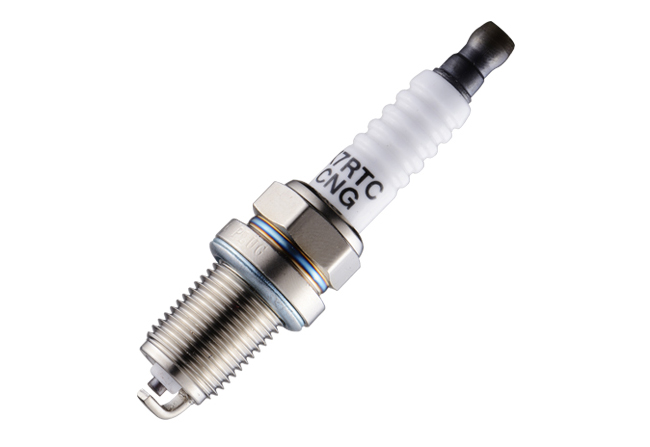
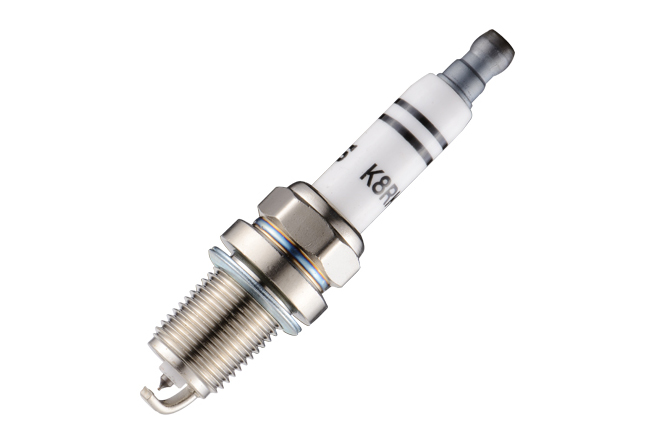
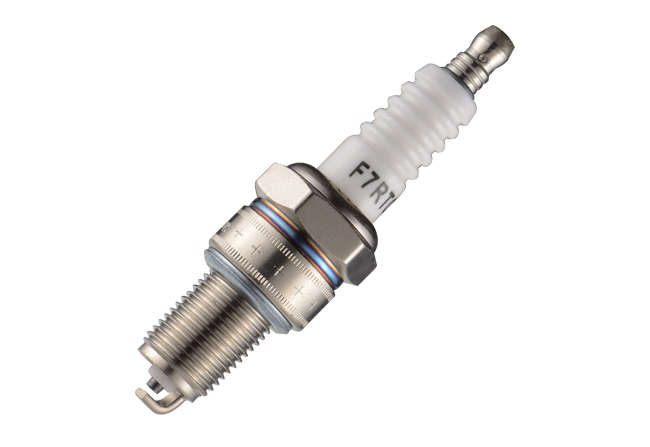 Custom Thread size 14mm automotive spark plugs F7RTC Suppliers, OEM Company - NMarshal Auto Parts Co., Ltd is China OEM Thread size 14mm automotive spark plugs F7RTC suppliers and company, Professional custom Thread...View Product →
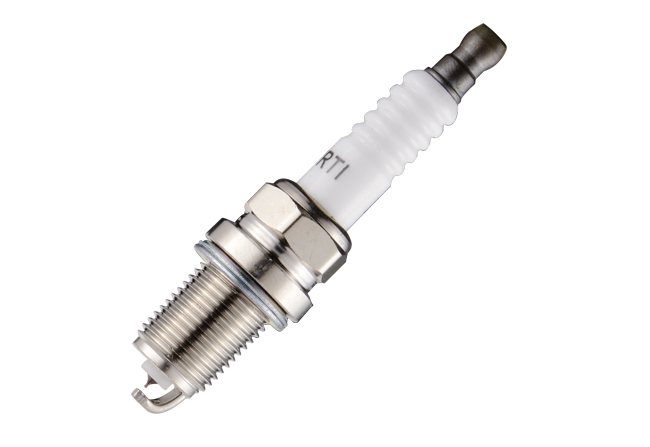 Custom Hex size 16mm automotive spark plugs K7RTI Suppliers, OEM Company - NingMarshal Auto Parts Co., Ltd is China OEM Hex size 16mm automotive spark plugs K7RTI suppliers and company, Professional custom Hex size ...View Product →
Boat owners face the same white-tip physics. A marine engine that runs hot or lean can scorch its plugs just as quickly as a car engine; the marine F6TC spark plug is one of the common replacement choices in our range and must be matched to the engine's heat requirement. If you are unsure which specification fits, our guide to choosing the right automotive spark plugs explains heat range, reach, and gap in plain terms.
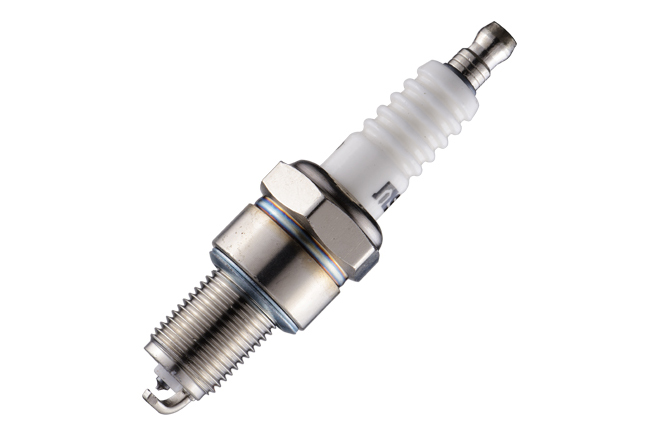
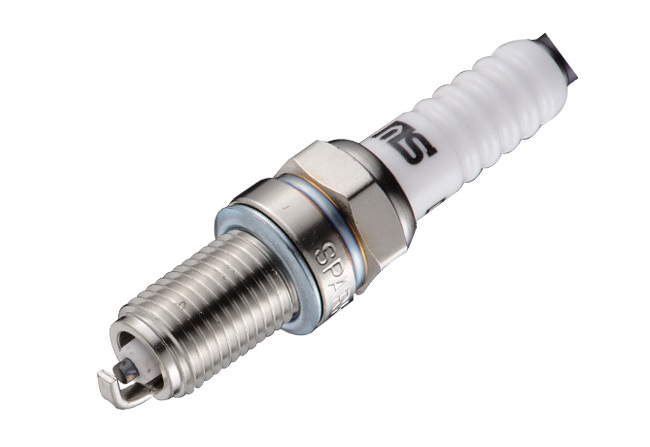
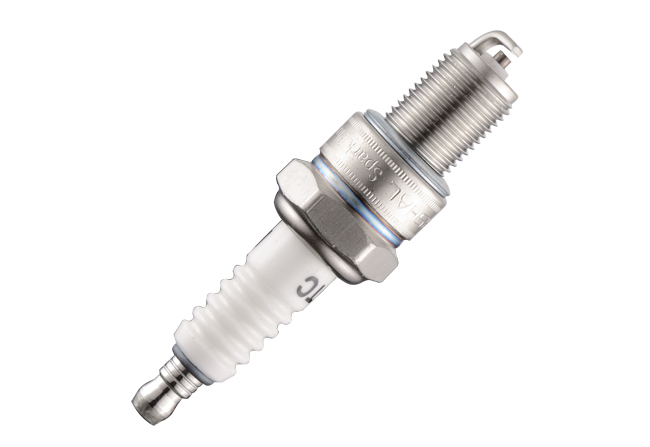 Custom Marine spark plugs reach 19mm F6TC Suppliers, OEM Company - Ningbo MarshMarshal Auto Parts Co., Ltd is China OEM Marine spark plugs reach 19mm F6TC suppliers and company, Professional custom Marine spark plug...View Product →
Yes. A slightly lean idle or light-load cruise can leave a whitish tip without noticeable drivability symptoms. The engine is still running hotter than intended, so check fuel trim and coolant temperature before the condition becomes destructive.
No. The plug is reporting a condition. Blisters, melting, or a badly eroded ground electrode mean the plug is being overworked — often by a heat range that is too hot — but the root cause usually sits in mixture, timing, or cooling.
Only after measuring the cause. A colder plug can reduce overheating and buy time, but it can also mask a lean mixture and lead to sooty deposits in light-throttle driving. Fix the mixture or timing first, then fit the heat range the engine maker specifies.
If the electrode is blistered or the insulator shows melt marks, stop driving and diagnose before further damage. If the tip is merely chalky with no erosion, you can drive gently to a workshop, but avoid heavy load and high rpm in the meantime.
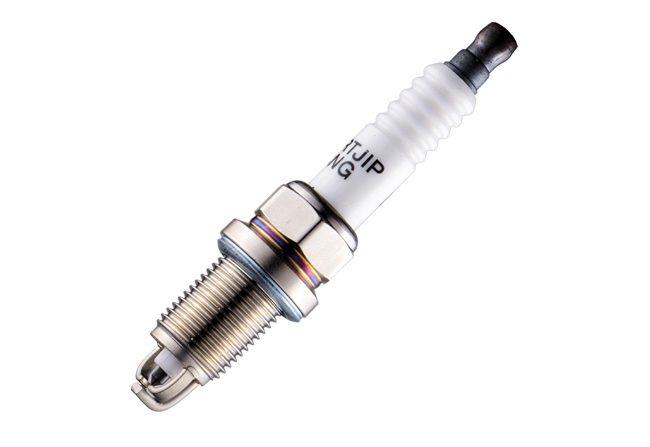

NINGBO MARSHAL AUTO PARTS CO., LTD. is a research and development, production and sales of professional manufacturers of spark plugs. Our company's spark plugs are mainly used in gasoline, natural gas and liquefied petroleum gas as fuel for all types of automobiles.
COPYRIGHT NINGBO MARSHAL AUTO PARTS CO., LTD. ALL RIGHTS RESERVED. Custom Spark Plugs Manufacturers OEM Spark Plugs Suppliers


 English
 中文简体
中文简体