Will bad spark plugs throw a code? Usually yes, but not a code that says “bad spark plug.” On most OBD-II vehicles, a plug that misfires badly enough sets P0300 for a random or multiple misfire, or P0301-P0308 for a specific cylinder. The scan tool identifies the symptom—misfire—not the failed part. That is why a P0301 code starts a diagnostic process rather than a parts order.
A plug can be the cause, especially when it is worn, fouled, cracked, or gapped incorrectly. A coil, injector, vacuum leak, or low compression can produce the same code. The useful question is not only “will it throw a code?” but “what evidence proves the plug is the cause?”
Content
OBD-II generic misfire codes are defined under SAE J2012. They tell you which cylinder or cylinders are misfiring; they do not name the spark plug, coil, or injector. That distinction matters because parts swapping can hide the real fault for a few miles and then bring the light back.
| Code | Scan-tool meaning | What it suggests |
|---|---|---|
| P0300 | Random or multiple cylinder misfire | More than one cylinder, or a fault that is not consistent. Check intake leaks, fuel pressure, multiple worn plugs, and ignition components. |
| P0301 | Cylinder 1 misfire | Start with the plug, coil, injector, and compression on cylinder 1. The code gives location, not proof. |
| P0302-P0308 | Misfire on the named cylinder | The same diagnostic logic applies to the cylinder named by the code. |
| P0351-P0358 | Ignition coil circuit fault | This points to the coil or its control circuit, not simply a worn plug gap. |
A steady check engine light with a misfire code deserves attention. A flashing light is more urgent because a severe misfire can overheat the catalytic converter; stop driving and diagnose promptly.
The misfire monitor uses crankshaft speed signals to detect small changes in acceleration after each combustion event. When the count crosses the calibrated threshold, the ECU stores a pending code, then a confirmed code, and may turn on the check engine light. Freeze-frame data and Mode 6 results often show which cylinder is contributing most.
In this illustrative snapshot, cylinder 1 is the clear outlier. A technician would compare that with the plug condition, coil behavior, injector pulse, and a compression or leak-down test before calling the plug bad.
A worn plug needs more voltage to jump the gap. Carbon or oil fouling gives the spark an easier path, and a cracked insulator can leak voltage down the shell. The result is a weak or missing combustion event that the crankshaft sensor detects as a misfire. A plug can look acceptable outside the engine and still break down under load.
When you remove the plug, read it like a diagnostic report: oil fouling, coolant residue, black soot, a bridged gap, or a worn electrode all point in different directions. For a practical inspection routine, see how to diagnose faults by checking spark plugs. The plug color is a clue, not a verdict.
A single-cylinder code such as P0301 narrows the search to one cylinder. A P0300 code is broader: it can mean several plugs are worn, a vacuum leak affects multiple cylinders, fuel pressure is low, or an ignition component common to more than one cylinder is failing.
The swap test is still one of the cleanest ways to prove a plug fault. Capture the freeze frame first; clearing codes too early destroys the evidence.
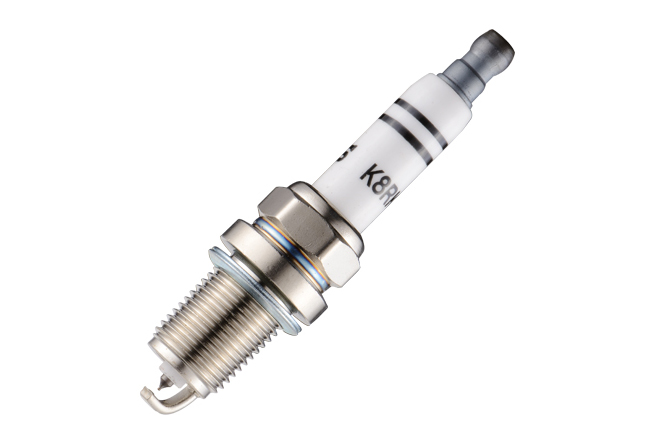
If the plug is confirmed as the fault, match thread reach, heat range, gap, and electrode type to the original specification. The K6RTI is one verified iridium replacement example in the Marshal automotive range.
A misfire code can survive new plugs because the plug was only a symptom. Coil boot carbon tracking, a failing injector, a intake gasket leak, or a burned valve can create the same P030x pattern. Use the code pattern and live data together.
| Pattern | More likely direction | Quick check |
|---|---|---|
| P0301 only at idle | Vacuum leak, injector, or ignition breakdown | Fuel trims, smoke test, cylinder balance |
| P0301 mainly under load | Plug gap, coil, or high-voltage breakdown | Swap test, coil boot inspection, gap check |
| P0300 with P0171 or P0174 | Intake leak or low fuel delivery | Long-term fuel trims, fuel pressure, smoke test |
| P0300 with no single outlier | Multiple worn plugs or a common cause | Maintenance history, plug condition, fuel quality |
Correct installation prevents a repeat code. Confirm the heat range, thread reach, and gap against the engine specification. Use a torque wrench; over-tightening an aluminum head is an expensive way to solve a misfire. Inspect the coil boot for carbon tracks, and do not add anti-seize unless the plug maker or service information calls for it.
No. Early gap wear, light fouling, or a marginal plug can cause rough idle, hard starts, or poor acceleration before the misfire counter reaches the threshold. Some vehicles are more sensitive than others, and some faults stay pending instead of turning on the light.
A missing code does not prove the plugs are good, and a misfire code does not prove the plugs are bad. Use the code as a starting point, then confirm with freeze-frame data, plug condition, and a controlled swap test.
Not always. Most OBD-II cars set P0300-P0308 when misfire exceeds the calibrated threshold, but mild wear may cause drivability symptoms before a code is stored.
Usually a P0300 random or multiple misfire code, or a cylinder-specific P0301-P0308 code. There is no generic “bad spark plug” code.
They can contribute to pending codes or other fault codes, but the check engine light may also come from fuel trims, ignition circuits, or emissions controls. Scan all modules and check freeze-frame data.
If the light is steady, diagnose it soon. If the check engine light is flashing, stop driving; a severe misfire can damage the catalytic converter.
It may clear the code if the plug was the confirmed cause. The code can remain until the repair is verified and the monitor runs, so do not clear codes before capturing diagnostic data.
Iridium plugs can hold their gap longer, but correct heat range, reach, gap, and installation torque matter more than the label alone. Use the specification for the engine.
Bottom line: a bad plug usually announces itself as a misfire code, not as a “spark plug code.” Use the code to locate the cylinder, then prove the cause with freeze-frame data, plug inspection, and a swap test. Replacing all plugs on a guess can mask a coil or fuel problem for a few miles, but it rarely fixes the root cause.
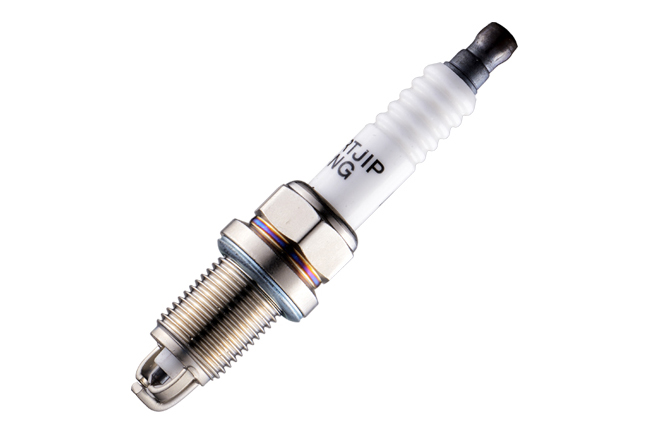
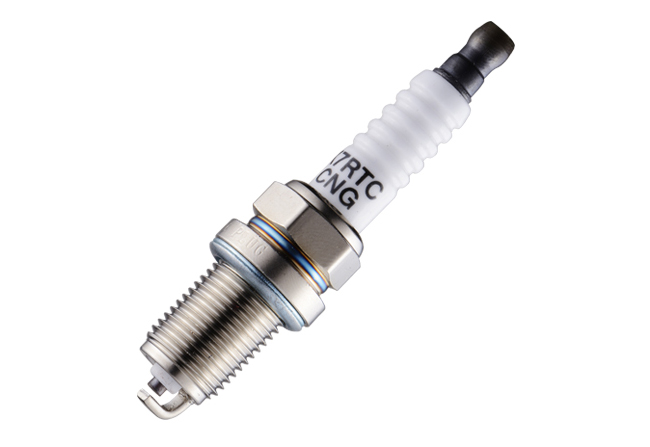
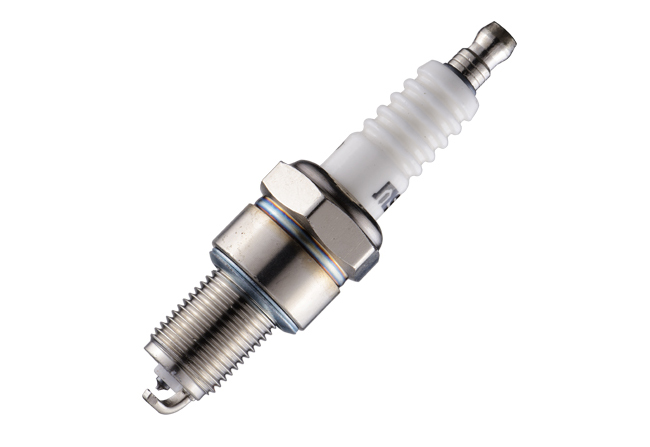
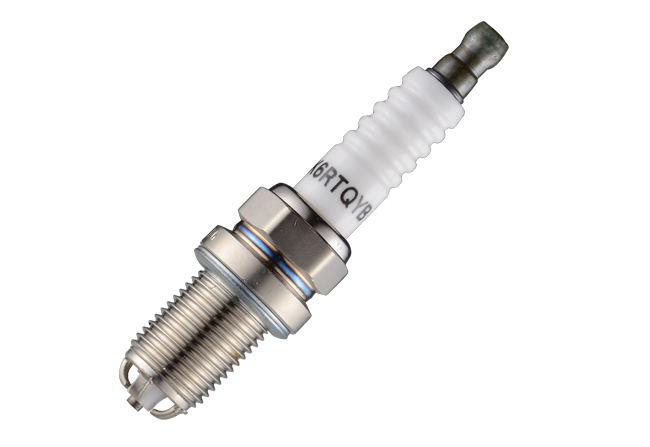

NINGBO MARSHAL AUTO PARTS CO., LTD. is a research and development, production and sales of professional manufacturers of spark plugs. Our company's spark plugs are mainly used in gasoline, natural gas and liquefied petroleum gas as fuel for all types of automobiles.
COPYRIGHT NINGBO MARSHAL AUTO PARTS CO., LTD. ALL RIGHTS RESERVED. Custom Spark Plugs Manufacturers OEM Spark Plugs Suppliers


 English
 中文简体