A rough-idling engine arrives in the workshop, and the plug that comes out has a black, oily nose. Before anyone orders a replacement, the useful question is which part of the plug actually failed. That is the job a labeled spark plug diagram does: it turns a small metal-and-ceramic assembly into a checklist you can hold against the component in your hand.
The short answer: a standard spark plug contains about eight parts, from the terminal nut at the top to the ground electrode at the tip, with a resistor and glass seal hidden inside the insulator. Four of them decide whether the plug fits and seals (thread diameter, reach, hex size, seat type). Three decide how it performs (center electrode, ground electrode, insulator design). Get the first group wrong and the engine will not start at all; get the second group wrong and it will run badly for thousands of miles without ever lighting a warning lamp.
Three groups inside every diagram
Content
Every conventional spark plug follows the same sequence, whether it is a 14 mm automotive plug or a 10 mm plug for a model aircraft engine. Working from the connection at the top down to the firing tip:
Figure 1: labeled isometric view of a spark plug
For a closer photographic walkthrough of the same sequence, see our article on the anatomy of a spark plug.
Fit dimensions do not negotiate. Electrode material can be upgraded, but thread diameter, reach, hex and seat type cannot be adjusted to suit whatever is on the shelf. Mix them up and the result is a stripped head, a piston that meets an electrode, or a compression leak that never shows up on a scan tool.
| Part | What it controls | Common values | Risk if wrong |
|---|---|---|---|
| Thread diameter and pitch | Whether the shell enters the head at all | M10, M12, M14, M18 | Cross-threading, damaged head threads |
| Reach | How deep the electrodes sit in the chamber | 9.5 mm, 12.7 mm, 19 mm, 26.5 mm | Piston contact, or a recessed and weak spark |
| Hex size | Which socket or tube wrench fits | 16 mm, 20.8 mm, 22.2 mm | No access in a deep plug well |
| Seat type | How the plug seals against the head | Gasket seat, tapered seat | Compression loss, overheating shell |
A plug with M14 thread and 19 mm reach covers a large share of the aftermarket, which is why it sits at the center of most replacement programs.
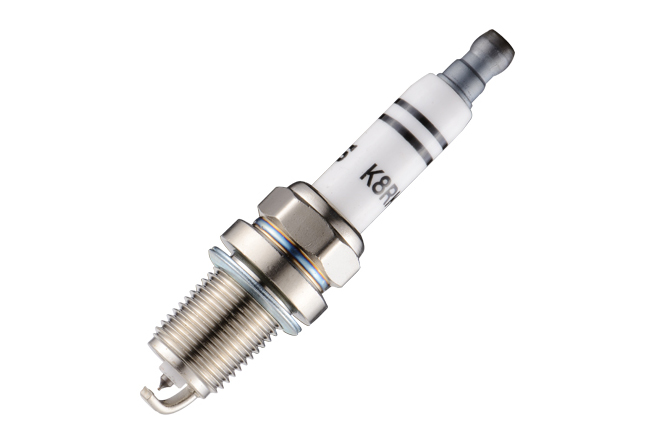
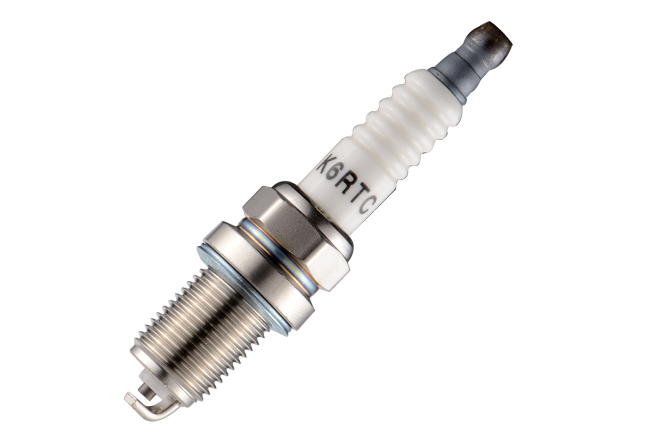 Automotive Spark Plugs K6RTCWe have a strong R&D team, and we can develop and produce according to the drawings or samples the customers offered.View Product →
The center electrode is where the spark leaves, and it is also a thermal road. Its core is almost always copper because copper conducts heat far better than the metals used on the tip. That difference explains why a copper core with a precious-metal tip works so well: the core pulls heat down into the insulator, while the tip survives the arc without eroding.
Thermal conductivity of electrode materials (W/m·K, room temperature)
Approximate room-temperature values from standard materials reference data. The practical limit in service is the tip material, not the core.
The ground electrode is the L-shaped arm welded to the shell. Gap size between the two electrodes is typically 0.8 to 1.1 mm on modern passenger-car plugs and closer to 0.6 to 0.8 mm on small two-stroke and garden engines. Erosion widens that gap over time, which raises the voltage needed to fire and puts extra load on the coil.
The length of the insulator nose inside the chamber sets the heat range. Too cold, and the tip stays below its self-cleaning temperature, so carbon builds up and shunts the spark. Too hot, and the tip glows, which invites pre-ignition. Spark plug technical literature commonly places the usable self-cleaning window between roughly 450 and 850 degrees Celsius at the insulator tip.
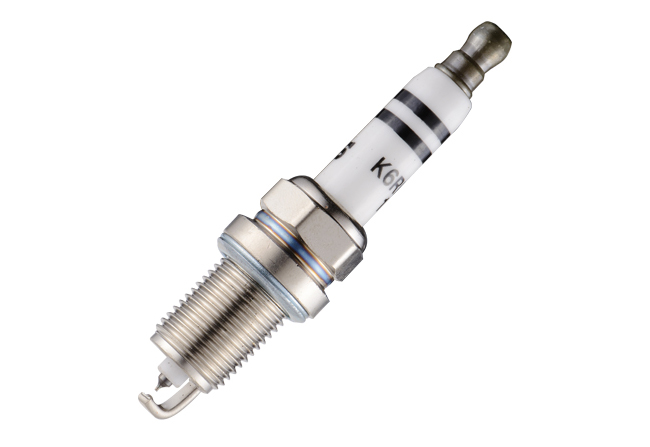 Reach 19mm automotive spark plugs K6RKAIP-11Center electrode:Iridium-tipped ElectrodeView Product →
A used plug is a printed record. Match what you see to the part that produced it:
Typical replacement windows by electrode type (thousand miles)
Ranges are the windows commonly published in aftermarket maintenance guides. The OEM schedule for the specific engine always takes priority.
Two plugs can look identical on a diagram and behave very differently in the chamber. The difference lives in dimensions the drawing does not carry: electrode concentricity, ceramic density, the torque holding the shell, and the weld that joins a precious-metal tip to the copper core.
According to the company's published process information, keeping the ceramic insulator in-house is one way to control that variable: insulators are produced in an own ceramic factory using 360-degree continuous laser technology, with a thickened nose for mechanical strength. Electrodes are certified to TUV and comply with RoHS and REACH, and the in-house laboratory runs 17 international and national spark plug test standards, supported by internal control standards covering more than 34 OEM-level tests.
That kind of vertical integration matters when a diagram says "M14, 19 mm reach" and the engine bay demands the plug survive the same heat cycle thousands of times. Our one-stop spark plug range covers automotive, marine, motorcycle, lawn and garden, industrial and aircraft-model applications, so one fit-and-performance conversation can cover several engine families.
A lawn mower plug and a car plug share the same labeled parts, but the numbers shift. Small engines typically use M10, M12 or M14 threads with a shorter reach, a 16 mm or 20.8 mm hex and a narrower gap, because they turn slower and carry lighter thermal loads. Fitting a long-reach automotive plug into a short-reach garden engine is one of the fastest ways to damage a piston at first pull.
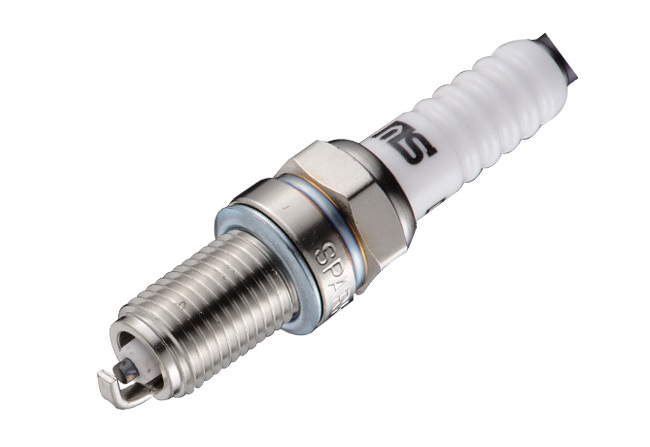
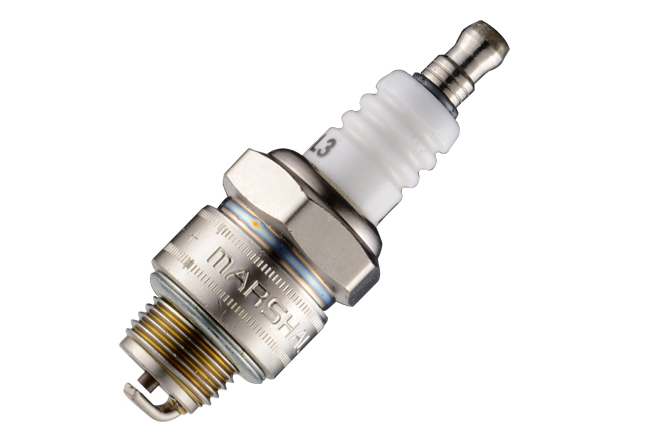 Thread size 14mm lawngarden spark plugs GL3The industry spark plug uses superior platinum/iridium metal electrodes which exhibit unsurpassed reliability and greatly extended service life.View Product →
Terminal nut, ceramic insulator, hex, gasket or taper seat, threaded metal shell, center electrode and ground electrode, plus an internal resistor and glass seal inside the insulator.
Both are precious-metal tips on a copper core. Iridium resists erosion best and allows a finer tip; platinum is often used on both electrodes in double-platinum designs. Both outlast a plain nickel plug.
Read the old plug or the OEM application list. M14 thread with 19 mm reach and a 16 mm hex is the most common passenger-car fitment, but always confirm reach before installing.
Dry black soot usually points to a heat range that is too cold for the driving pattern or a rich mixture. Wet, oily black deposits mean oil is entering the combustion chamber.
Nickel and copper plugs commonly run 20,000 to 30,000 miles, platinum 40,000 to 60,000, and iridium tips up to 100,000 in engines whose ignition system supports it.
Yes. Erosion widens the spark gap, raising the firing voltage until the coil can no longer keep up. The symptom usually appears first under load or at high rpm.
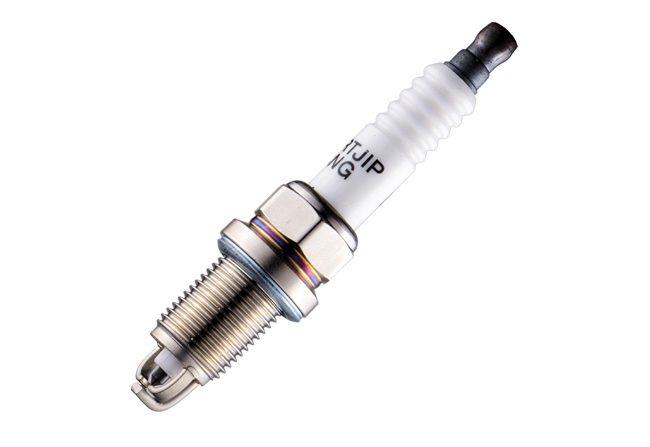
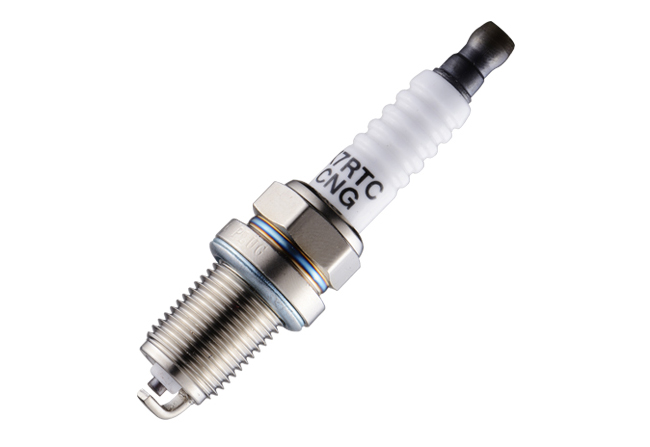
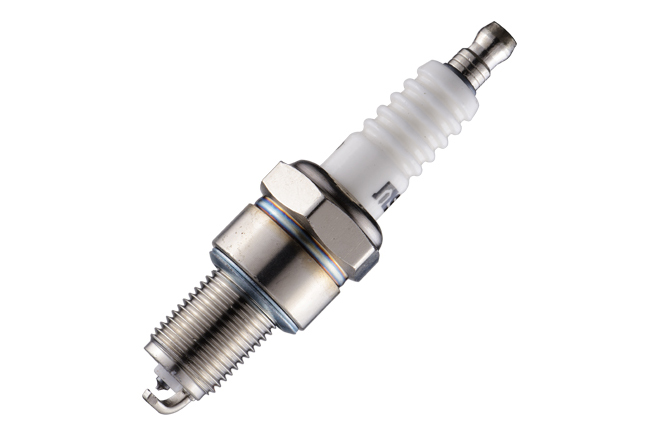
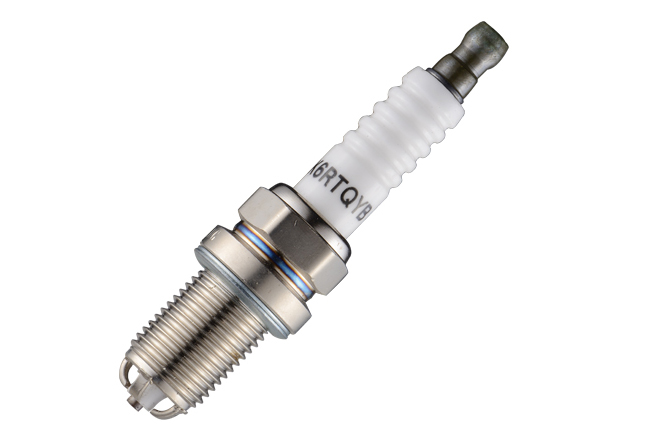
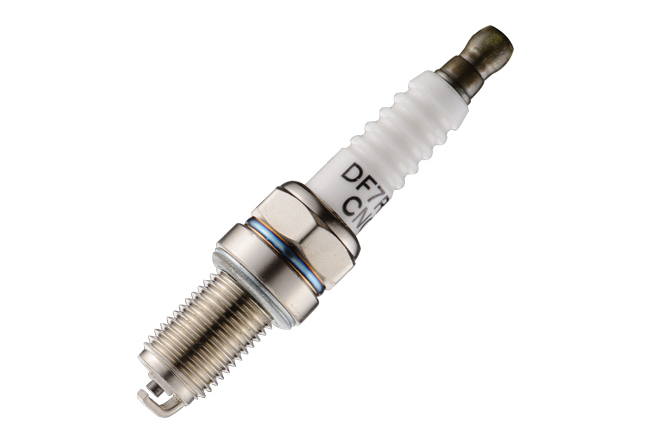

NINGBO MARSHAL AUTO PARTS CO., LTD. is a research and development, production and sales of professional manufacturers of spark plugs. Our company's spark plugs are mainly used in gasoline, natural gas and liquefied petroleum gas as fuel for all types of automobiles.
COPYRIGHT NINGBO MARSHAL AUTO PARTS CO., LTD. ALL RIGHTS RESERVED. Custom Spark Plugs Manufacturers OEM Spark Plugs Suppliers


 English
 中文简体
中文简体