A cracked insulator nose found in one carton out of fifty is enough to trigger a misfire complaint, a warranty claim and a dealer visit that costs many times the price of the plug itself. Buyers who audit spark plug manufacturing learn quickly that a price per thousand pieces tells them almost nothing about that risk.
The short version: in spark plug manufacturing, long-term durability is decided at three points — the ceramic insulator, the electrode weld and the shell-to-insulator lock. Plating, printing, gapping and packing matter, but they rarely cause a field failure on their own.
What follows is a walk through how a plug is actually built, using the published process details of Ningbo Marshal Auto Parts, a Ningbo-based spark plug manufacturer operating since 1992, alongside general industry practice. It is written for buyers, engineers and aftermarket program managers who need to compare factories rather than brochures.
Content
Every plug is a stack of four sub-assemblies that have to share a single axis, and the sequence is fixed. A defect created early cannot be corrected later.
Because the steps run in sequence, a low-density ceramic or an off-spec thread only shows up three stations later — as scrap, or worse, in the field. Auditors therefore work upstream, from the powder room to the packing line. For a component-by-component breakdown of the finished part, see this guide to the anatomy of a spark plug.
The ceramic body does three jobs at once. It isolates the center electrode at high voltage, it conducts heat from the firing end down to the shell, and it survives the thermal shock of cold starts followed by full-load running. Ceramic density and purity decide dielectric strength; the geometry of the nose decides whether the part survives installation torque in a workshop.
Vertical integration matters more here than most buyers expect. Ningbo Marshal states that its insulator ceramic comes from its own ceramic factory, that precision insulator equipment was upgraded in 2019, and that the insulator nose is thickened for better mechanical strength while keeping high density and dielectric strength. The company also describes its high-strength insulators as produced with 360-degree continuous laser technology.
The purchasing implication is practical. When ceramic is bought from an outside supplier, the feedback loop between a sintering drift and the final electrical test is measured in weeks. When it is made in-house, a density sample can be traced back to a kiln load the same day.
Electrode choice is a heat-management decision before it becomes a marketing decision. A copper core carries heat away from the firing tip, while the tip alloy decides how long the gap stays in tolerance. Iridium and platinum tips are welded on, and a poor weld is one of the few defects that ends in a destroyed engine rather than a rough idle.
Ningbo Marshal introduced German laser welding for precious-metal plugs in 2013, and states that its electrodes are TUV certified and compliant with RoHS and REACH. Shell material is described in terms of plasticity, toughness and hardness — properties that reduce cracking during installation and support heat transfer into the cylinder head.
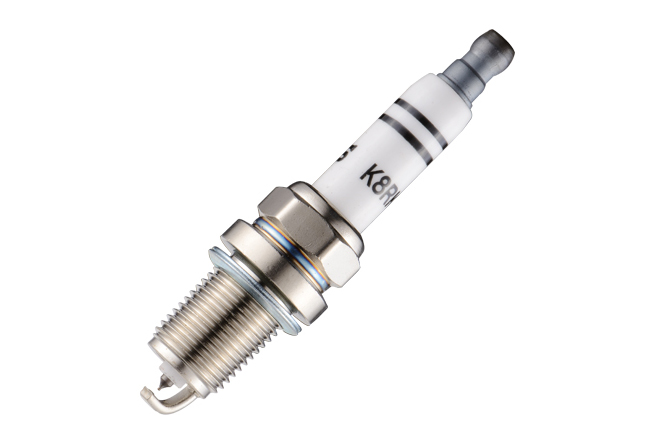
A representative precious-metal part from that range is the K6RKAIP-11, which pairs an iridium tip with a platinum electrode design:
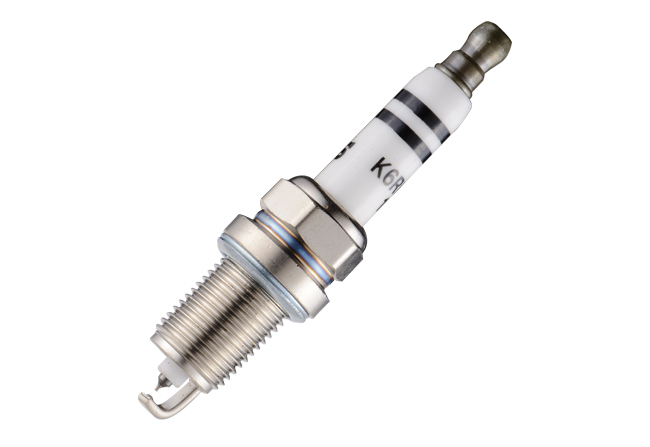 K6RKAIP-11 Iridium-Platinum Automotive Spark PlugReach 19 mm resistor plug with iridium tip and platinum ground electrode; specifications and customization details support factory comparison and weld-quality checks.View Product →
When you compare factories, ask for weld pull-test data, cross-section photos and the laser parameters recorded per shift — not only a certificate of conformity.
The lock is the joint where the steel shell grips the ceramic. It has to hold combustion pressure, resist vibration and keep the heat path intact for tens of thousands of kilometres. Two methods dominate production lines today.
The shell is heated so it expands, the insulator is seated, and the assembly is allowed to cool into a controlled interference fit. Cycle times are short and the seal is consistent, but the ceramic passes through a temperature excursion that has to be engineered carefully.
The shell is formed around the insulator at ambient temperature. There is no thermal stress on the ceramic, so the process is gentler on thin-walled insulators, but it demands tighter dimensional control on both parts to reach the same gas-tight result.
Ningbo Marshal's published milestones show the sequence clearly: an automatic hot-lock assembly line for resistor-type plugs in 2009, cold-lock technology in 2015, then an upgrade of precision insulator equipment in 2019. By 2021 the company reported annual output above 100 million pieces, up from more than 80 million in 2019.
Testing is where manufacturing claims become verifiable. Ningbo Marshal's laboratory states that it executes 17 international and national spark plug standards, that its internal control standard covers more than 34 original-equipment-level tests, and that process inspection covers every control point on the line. That combination — 100 percent in-line checks plus sampled standards testing — is the structure a buyer should look for.
The same line logic has to be re-tuned for each application, because what kills a plug changes with the engine.
Marine plugs face humidity and salt air; small two- and four-stroke garden engines fail on fouling more often than on electrode wear; industrial engines run long duty cycles at steady load, which shifts the emphasis to electrode erosion and shell strength. Ningbo Marshal covers all six families, including industrial plugs such as the GXH1-30:
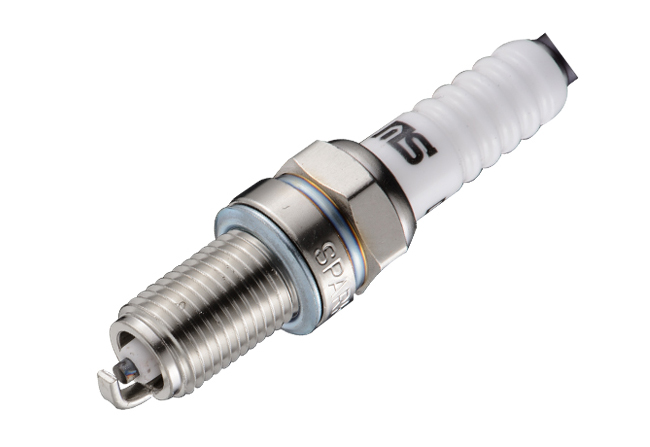
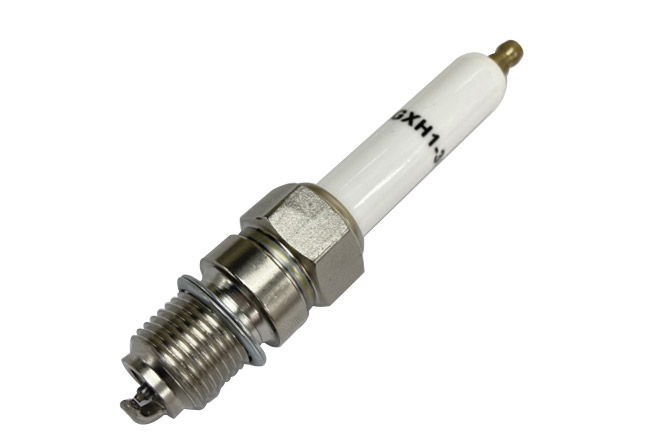 GXH1-30 Industrial Spark Plug, 22.2 mm HexIndustrial plug with 18 mm thread, 22.2 mm hex, copper core and nickel electrodes; its long-duty specification supports plant audits and supplier verification.View Product →
When you audit a plant — or a trading company claiming to be one — a handful of questions separate a real manufacturer from a reseller with a catalogue.
| Manufacturing stage | What it decides | What to verify |
|---|---|---|
| Insulator forming and sintering | Dielectric strength, thermal shock resistance | In-house ceramic, density sampling records, kiln traceability |
| Shell machining and plating | Thread fit, installation torque, corrosion life | Go/No-Go thread gauges, plating thickness, salt-spray reports |
| Electrode welding | Tip retention, gap stability over service life | Pull-test data, cross-sections, laser parameters logged per shift |
| Lock assembly | Gas seal, heat path, vibration resistance | Force and travel monitoring, leak test on 100 percent of pieces |
| Final test and packing | Batch conformity and traceability | 100 percent dielectric and gap check, sampled standards testing |
Compatibility work matters just as much for aftermarket programs. Ningbo Marshal describes 30 years of development and reverse-engineering experience, which means existing market models can be matched rather than only catalogue parts being offered. The audit questions stay the same whether the program is a 14 mm automotive plug or a small-engine part such as the GL3:
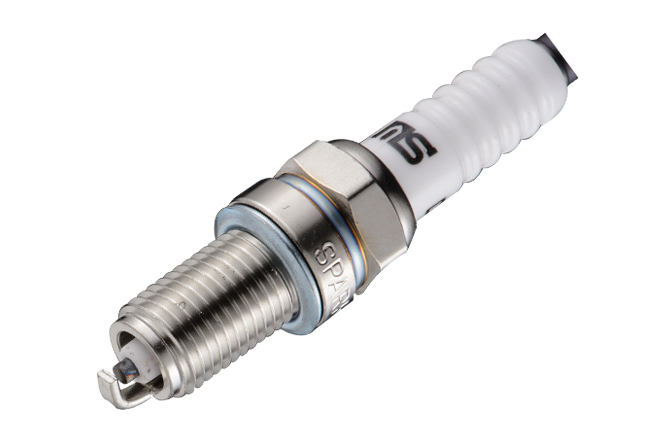
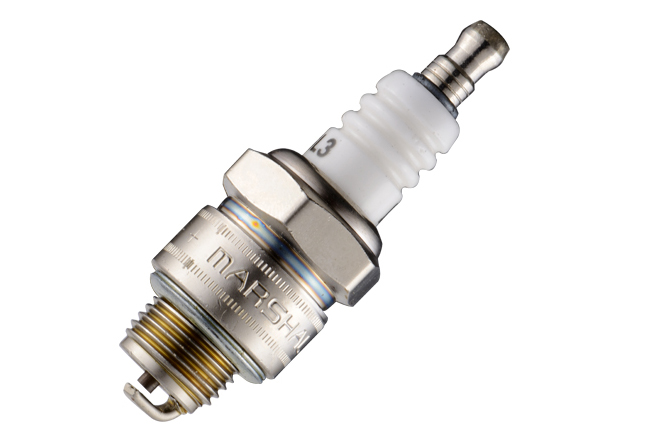 GL3 Lawn and Garden Spark Plug, 14 mm ThreadNon-resistor small-engine plug with 14 mm thread, 9.5 mm reach and copper center electrode; a suitable reference for aftermarket compatibility work and supplier audits.View Product →
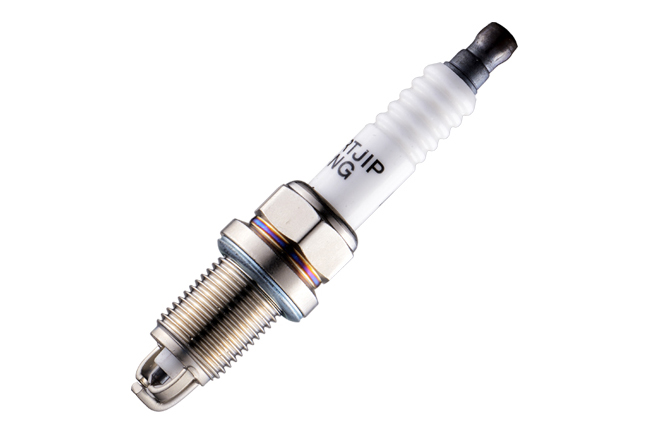
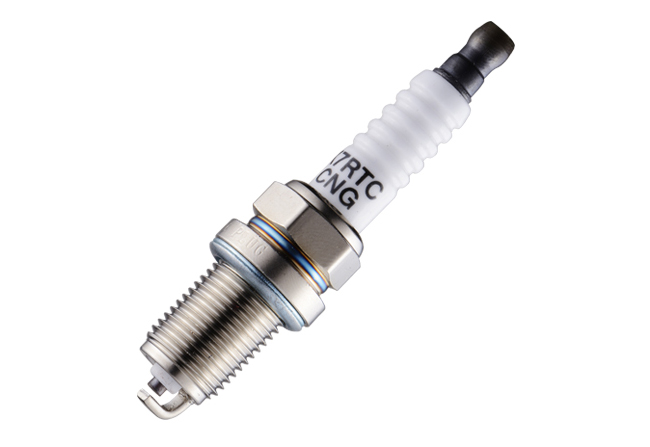
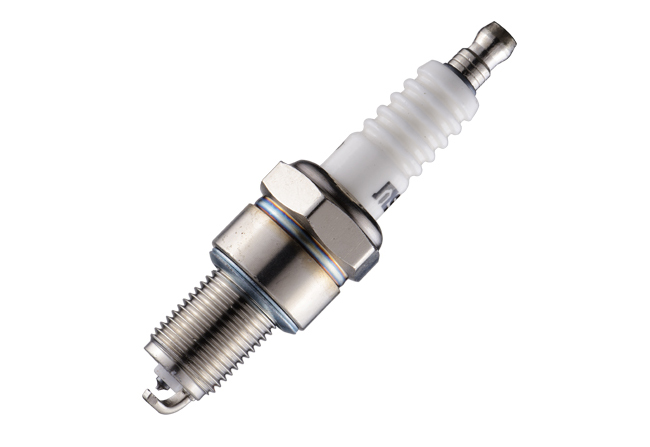
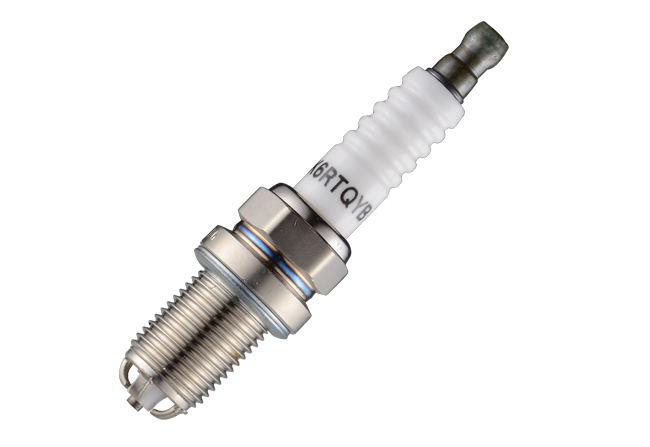
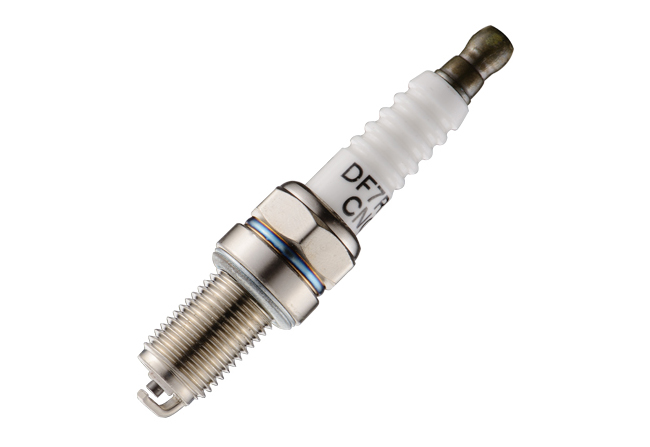

NINGBO MARSHAL AUTO PARTS CO., LTD. is a research and development, production and sales of professional manufacturers of spark plugs. Our company's spark plugs are mainly used in gasoline, natural gas and liquefied petroleum gas as fuel for all types of automobiles.
COPYRIGHT NINGBO MARSHAL AUTO PARTS CO., LTD. ALL RIGHTS RESERVED. Custom Spark Plugs Manufacturers OEM Spark Plugs Suppliers


 English
 中文简体